Albania: Priceless Environmental Gem Threatened By Luxury Tourism
Albania needs to blaze a trail towards a sustainable future that safeguards its natural treasures.
As Europe is confronted with shifting geopolitical currents, Albania —a small Southeast European nation—continues to grapple with life-changing environmental challenges and recurring corruption scandals that warrant sustained scrutiny by Brussels’ lofty bureaucrats.
In recent years, Albania has distinguished itself not by embracing sustainable ecotourism but by positioning itself as a luxury mass-tourism destination. The construction of a brand-new airport in Vlora, near a key Mediterranean wetland, has become a hair-raising, page-turning corruption scandal. European Commission experts maintain that the project violates both international conventions and national law.
The consortium selected to build the airport includes a controversial Kosovar businessman and politician—long associated with a culture of impunity—Behgjet Isa Pacolli, who has deep ties to Moscow, as well as a personal friend of Albanian Prime Minister Edi Rama, who allegedly has connections to organized crime figures. In the 1990s Pacolli’s construction company was hired by Moscow to renovate the historical buildings of the Kremlin.
While Rama has celebrated the megaproject with great fanfare, despite its development being financed by funds from undisclosed sources, much of the population and numerous renowned environmentalists warn that the project will irreparably damage one of the largest wetlands in the Mediterranean, home to hundreds of bird species. Only a few months after the airport tender winners were announced, national authorities unabashedly revoked the long-established status of “environmentally protected area” for parts of the nature reserve where the airport has already been built—a decision the European Commission considers illegal. Furthermore, over the past three years, President Bajram Begaj has not convened a single meeting of Albania’s National Security Council.
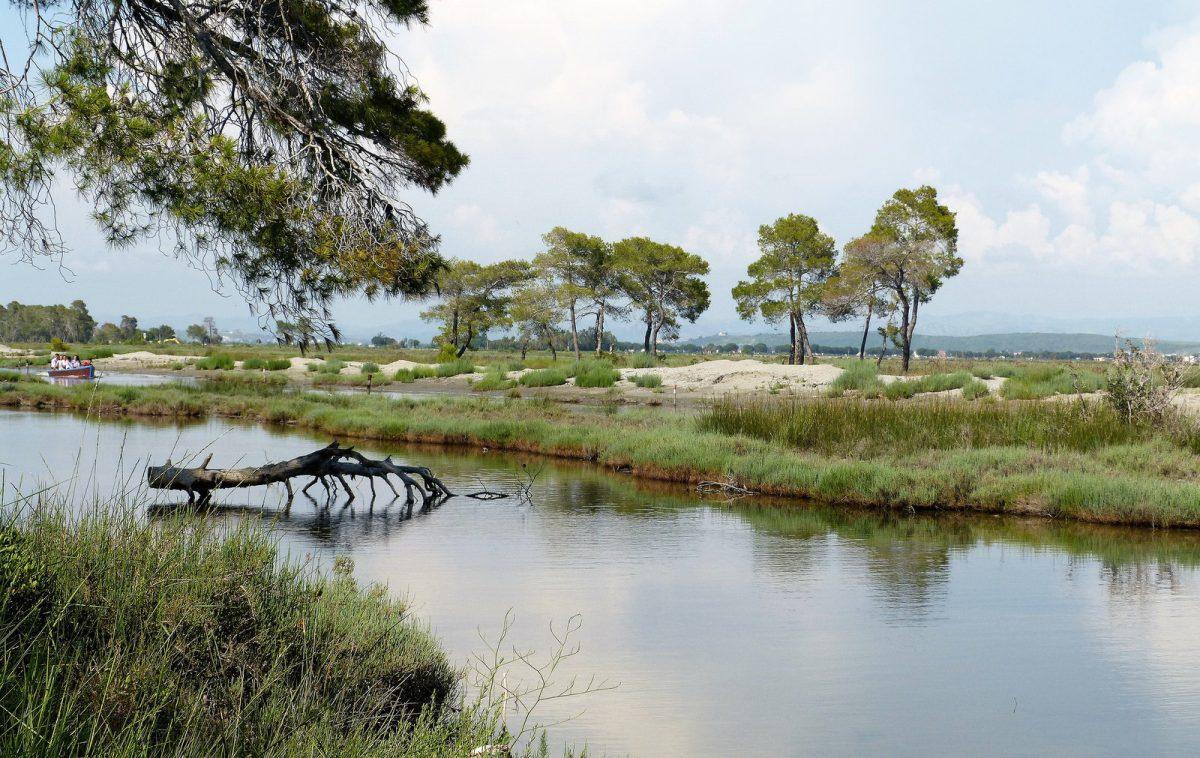
According to biology professor Niko Dumani: “while the airport and the tourist resorts planned for nearby are in flagrant violation of the law, the airport will sit a few kilometers from the Vjosa-Narta lagoon, part of a coastal delta at the mouth of one of the last wild rivers in Europe. The wetlands are home to some 200 species of birds, including flamingos and the endangered Dalmatian pelican, and form part of a key migration corridor for many more on their annual journey from Central Europe to North Africa.” This magnificent lagoon is already protected by several international conventions and has been nominated to join the Council of Europe’s Emerald Network of special conservation sites. According to the European Commission, “Tirana’s approval of Vlora International Airport violated both national laws and international conventions.”
Inside the gloomy building of the Council of Ministers, at the heart of Tirana—behind successive ramparts of white and pink granite and a miniature vertical forest embedded in the building—Edi Rama, with his carbuncled nose and carefully trimmed beard, habitually shuns the light of day and the glare of publicity, while appearing to lack a sincere sense of social responsibility toward the environment. Over the past twelve years, to the chagrin of many, the Albanian government’s petulant trio has failed to grasp the importance of preserving the pristine swamps and wilderness flora of the lagoons in the Fier District of southern Albania.
The dizzying array of policy decisions affecting Fier’s energy, environmental protection, tourism, and local economic development demands far greater attention and sustained engagement from the Albanian government. Albania’s path toward EU integration runs unequivocally through measurable performance and concrete action in defense of the environment and circular-economy initiatives.
The Divjakë-Karavasta National Park is another natural region in southwestern Albania facing constant threats from institutional breakdowns and Tirana’s scorched-earth development strategy. The Karavasta Lagoon is among the most species-rich ecosystems within Albania’s protected areas and hosts, among other treasures, the breeding grounds of the country’s only colony of endangered Dalmatian pelicans. That the lagoon remains intact and continues to attract the lenses of some of the world’s leading ornithologists is largely thanks to one man: Ardian Koçi.
During his tenure as national park director, Koçi’s steadfast commitment to protecting the park was exemplary, making it one of the best-managed nature reserves in the country. Today, however, investment plans that disregard protected-area regulations threaten the national park, along with several other natural treasures of Albania.
On October 16, 2025, Albania’s renowned conservationist Ardian Koçi received the EuroNatur Award for Environmental Excellence in recognition of “his great personal commitment to protect Divjakë-Karavasta National Park and for his integrity, putting up with professional as well as private disadvantages,” as stated by EuroNatur Executive Director Gabriel Schwaderer.
Mr. Koçi is a licensed veterinary surgeon who, in 2013, was appointed by the new Albanian government under Prime Minister Rama as director of Divjakë-Karavasta National Park, leaving behind well-paid employment opportunities in Italy.
The EuroNatur Award for Environmental Excellence honors outstanding commitment to nature conservation, environmental protection, environmental education, and the promotion of sustainable development. It is awarded to individuals who have demonstrated exemplary dedication to preserving natural resources over an extended period. First presented in 1992, previous recipients include author Jonathan Franzen, the brave women of Kruaica, and the municipality of Mals in South Tyrol.
In his laudatory speech, Gabriel Schwaderer underscored the integrity of the laureate: “Ardian Koçi has taken his work as a trustee for nature seriously and has selflessly championed its protection. His uncompromising, clear-cut position rubbed others up the wrong way, on the local as well as national level.”
It is well known that Koçi’s unbridled leadership and consistent enforcement of Albania’s hunting ban made him a thorn in the side of numerous hunters and poachers. His courageous opposition to plans for large-scale tourism facilities within Divjakë-Karavasta National Park likewise caused discontent among elite circles within the Albanian government. Consequently, in 2023, Koçi was effectively forced to resign.
In his award-acceptance statement, Koçi remarked: “I was more afraid of losing my passion for the job than losing the job itself. EuroNatur Award represents all committed Albanian conservationists: this honor does not belong to me alone. It is dedicated to all those who – sometimes at great personal sacrifice – stand up for the forests, wetlands and wildlife which are part of our natural heritage.”
It is time for Prime Minister Rama to chart a practical path toward addressing Albania’s environmental challenges and to implement public policies that do not harm the country’s western wetlands. In an increasingly crowded and multipolar world, Tirana must rein in the development of large hotel chains within the boundaries of internationally protected parks.
Albania’s entrenched bureaucracy and recalcitrant functionaries continue to fuel environmental degradation, transforming the country into an unsustainable grid of large, luxurious concrete resorts that endanger both terrestrial ecosystems and marine protected areas.
Peter Tase is an analyst of Latin American and European geopolitics.