Ancient Bird Migration Paths Offer Clues To Modern Plant Distribution
Plants in the melastome family seem to have a special affinity for the Massif de la Hotte, which is home to 64 melastome species, 44 of which are endemic.
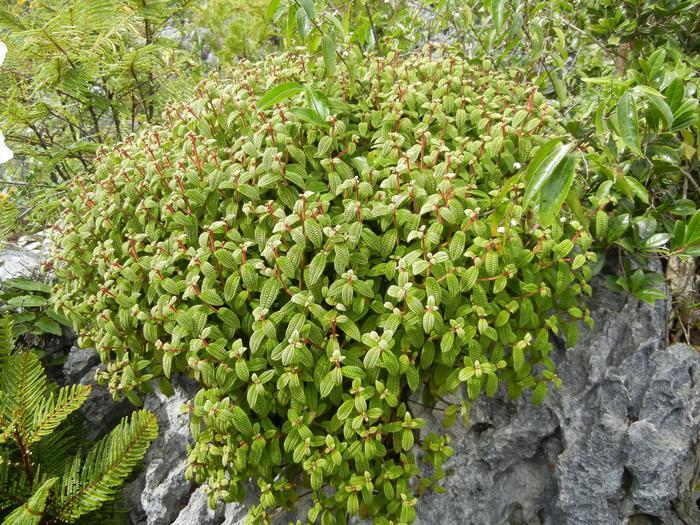
Plants in the melastome family have an affinity for Haiti's Massif de la Hotte, which is home to 64 melastome species. Credit:
Florida Museum, Lucas Majure.
Key points:
- The Massif de la Hotte is a young, exceptionally biodiverse mountain range in southern Haiti that is home to an unusually large number of species that grow there and nowhere else.
- Scientists used a group of plants called melastomes as a case study to determine how, when and why this mountain range accumulated so many unique species.
- The results suggest that birds flying over the Caribbean Sea between eastern Cuba and southwest Hispaniola may be responsible for a significant proportion of the region’s diversity.
- The study builds on decades of research, most notably that of the botanists Erik Ekman and Walter Judd.
It's not what they intended to do or expected to find. They're not even all that interested in birds. When Andre Naranjo and his colleagues began work on a new study published in the Botanical Journal of the Linnean Society, they wanted to know why a small mountain chain on the island of Hispaniola had more plant diversity than just about any other spot in the Caribbean. As far as they were concerned, the island's birds were merely an unnecessarily complicated form of seed dispersal.
Birds made things particularly complicated in this case, because according to their results, a significant portion of the plant diversity on the Massif de la Hotte in southern Hispaniola didn't come from other parts of the island, as they'd expected. Instead, they seem to have originated in eastern Cuba, suggesting that birds regularly traveled between the islands along a specific route. The authors say that other modes of dispersal cannot be ruled out, but because birds commonly consume the fruits produced by many of the plants in question, they are considered the likeliest means of conveyance.
As an example, the authors share their discovery of a dispersal event that occurred 1.6 million years ago when a plucky bird made the non-stop flight of more than 100 miles from southern Cuba to the mountainous Tiburon Peninsula, oriented latitudinally at the southwestern edge of Hispaniola. The bird wisely carbo-loaded before making the trip by eating the sugary fruit of Miconia, a type of flowering plant with deeply grooved leaves and conveniently beak-sized berries. The bird indelicately deposited what remained of the fruit in a white blob of uric acid and undigested cellulose surrounding a perfectly undamaged Miconia seed, which proceeded to sprout into a new plant.
Between then and now, that single, isolated plant evolved into 18 species, most of which can be found on the Massif de la Hotte and nowhere else. Nor are they alone. About 34% of Hispaniola’s plant species are endemic, many of them restricted to this one mountain range.
“It’s a biodiversity hotspot within a biodiversity hotspot,” said the study’s lead author, Andre Naranjo, who conducted the research while working as a postdoctoral associate at the Florida Museum of Natural History.
The Caribbean Islands are collectively one of 36 biodiversity hotspots worldwide, defined as an area that harbors at least 1,500 endemic plant species that have been endangered by extensive habitat loss. The Massif de la Hotte is located in the Pic Macaya National Park, which, according to Naranj,o has lost 75% of its forests despite being one of the oldest national parks in the Caribbean.
“Within the last 35 years, whole habitats have been clear cut by people in the surrounding villages for firewood to literally just survive because the economic situation in Haiti is so dire,” he said.
Study built on more than a century of research in Hispaniola
The study is an offshoot of a rich and vibrant history of plant collection and research on the island that can, perhaps most notably, be traced to 1917, when a Swedish botanist named Erick Ekman begrudgingly traveled to Hispaniola to study the island’s plant life. A few years earlier, Ekman had submitted a research proposal to the Swedish Academy of Sciences for funds to conduct field work in Brazil, which he successfully obtained. But the botanical powers that be (at the time) at the Swedish Museum of Natural History and the Berlin Botanical Garden convinced the academy to tack on a lengthy foray in Hispaniola to Ekman’s itinerary, thereby igniting a droll academic feud that would smolder with occasional flare-ups until Ekman’s death in 1931.
Ekman was recalcitrant and initially refused to be reassigned. At one point, already overseas, he stopped communicating with his benefactors altogether. The academy retaliated by withholding his funds. In response, Ekman refused to send the plants he’d been collecting back to the botanists in Europe, eagerly waiting to study them.
Ekman eventually capitulated and arrived in Haiti in 1917 after a bad case of malaria and a short stint working on a sugar plantation in Cuba. He spent the rest of his life crisscrossing the island and documenting its flora in a manner that most people deemed eccentric. He had an austere work ethic and took few supplies with him on his excursions, sometimes lacking even a blanket to ward off the cold mountain air.
According to the botanist Richard Howard, “A stalk of bamboo, properly plugged, served as his canteen and his food supply was limited to a few biscuits and tea…He depended on the hospitality of the inhabitants of any area he visited,” and “he was willing to accept even the poorest accommodations.” He was reportedly found curled up on a porch against someone’s front door on one morning and sleeping under a house on another. When he ran out of water, which seemed to happen often, he wrote that he would drink “from the leaf clusters of bromeliads. This water may look bad, at times, and may be the natural habitat of many strange animals, but one ceases to be finicky when one’s lips burn from thirst.” When there were no bromeliads around, he chewed on palm hearts and coated his “burning lips in mosses and moist soil.”
Ekman’s peculiarities made him an exceptional botanist. He collected 16,000 plant specimens in Hispaniola and another 19,000 in Cuba, which has so far led to the discovery of 2,000 new species.
Six decades later, biologists at the Florida Museum of Natural History organized a series of extensive expeditions to the Massif de la Hotte, where, on July 23, 1983, the Parc National Pic Macaya was established. Two years earlier, the government of Haiti had established its first national park in the Massif de la Selle, which the team also planned to sample. Both mountain ranges are located on a peninsula in southern Hispaniola that was once likely its own island before it smashed into the rest of the country, throwing up a few mountains and encircling what was once a narrow ocean strait and is now an interior lake resting 151 feet below sea level, the lowest point on any island in the world.
The new national designations were an attempt to protect forests that were rapidly disappearing on la Hotte and la Selle and being replaced with farmland. Areas that were unsuitable for growing food were burned by local residents, who collected the resulting carbonized tree skeletons to make charcoal.
Several federal agencies, including the United States Agency for International Development, the Institut de Sauvegarde du Patrimoine National, and the Ministere de l’Agriculture des Ressources Naturalles et tu Development Rural, worked together to protect what remained.
The expeditions, led by the Florida Museum curator of mammalogy Charles Woods and funded by USAID, were carried out to create a biological inventory that could be cross-referenced at any point in the future to assess the region’s ecological health over time.
Woods assembled a crack team of ornithologists, mammalogists, herpetologists, paleontologists and entomologists for the job. Wood tapped Walter Judd, a biology professor at the University of Florida and affiliate scientist at the Florida Museum, to handle the plant side of things.
Few botanists had traipsed through the southern mountains of Haiti since Ekman, and certainly none of them had done nearly so thorough a job. But Judd was among the few who’d worked in Haiti, and he seemed like a natural successor to Ekman. He’d once made his own personal natural history museum inside a vacant chicken coop when he was a child, and the doctoral dissertation he’d completed at Harvard — a dense monograph on a group of blueberry relatives in the genus Lyonia — was rumored to have weighed ten pounds after it’d been typed out.
But where Ekman was severe, Judd was breezy.
“He was the kind of guy I’d feel comfortable traveling anywhere with. He just never got rattled,” said Roger Portell, the museum’s collection director of invertebrate paleontology who participated in one of the 1984 expeditions to La Hotte with Judd.
Judd’s attention was, by default, powerfully attracted to anything with chloroplasts in his field of vision. Not even the smallest plants escaped his notice. He’d studied bryophytes as an undergraduate student at Michigan State University and collected dozens of them during the Haiti expeditions. He worked with the contentedly intense excitement of a golden retriever and, like Ekman, was unphased by adversity. At point during the expeditions, several members of the team got sick, including Judd, who didn’t seem to notice.
“He’d be all excited by something he would find, then he’d throw up, then find something else he was excited about and throw up again,” Portell said.
The expedition literally followed in Ekman’s footsteps in some places, visiting the same spots he’d been to and recorded in his field notes to determine whether the species he’d observed were still there. That meant starting near the base of the Massif de la Hotte and ascending to its peaks, which top out at 7,700 feet.
Given that its slopes are teeming with plant diversity, it would be reasonable to expect that the Massif de la Hotte is an ancient mountain range that has been accumulating species for many millions of years. But, in fact, the opposite is true. Mountains like the Cordillera Central in the Dominican Republic and its extension into Haiti as the Massif du Nord have been silhouettes against the sky for more than 65 million years. But the Tiburon Peninsula, composed of the Massif de la Hotte in the west and the Massif de la Selle in the east, only recently rose above the ocean’s surface.
Prior to that, the region had been a shallow marine plateau on which the ocean dumped its excess calcium carbonate in the form of dead diatoms, forams, coccoliths and other obscure types of armored plankton. This created a layer of limestone that was later folded like dough — to a depth of more than 3,200 feet — by the movement of tectonic plates and leavened by the upward pressure of ancient oceanic crust that elevated it to its current position.
It’s unknown exactly when these marine mountains transgressed from the sea, but evidence from studies that calculate the age of its endemic inhabitants (like this one) suggest the Massif de la Hotte has been above water for about six million years, give or take a few eons.
Its lower slopes, beginning at about 2,500 feet, were once lushly covered in a type of forest that Haitians call Rak Bwa (rock forest) and visiting biologists more generally refer to as a health hazard. Here, the ancient limestone is being eroded back into the sea, creating a terrain that looks and feels like a cheese grater with bits of vegetation growing out of the perforations. Though it looks relatively safe from a distance, the ground is littered with natural booby traps in the form of sinkholes and solution vents hidden by sprawling vegetation that unexpectedly gives way when stepped on, like a thin veneer of ice over an Arctic crevasse. The surrounding solid ground isn’t much better, having been weathered into pikes and craters with sharply acute angles aptly called dogtooth limestone.
The Rak Bwa forests were already being cleared when Ekman passed through, and about 90% of it was gone by the 1980s. Most of what’s left grows in small clumps where the dogtooth limestone was too exposed or intractable for tilling.
Higher up in elevation, the slopes alternate between wet rainforests and screes supporting an impenetrable wall of ferns and prickly briars that grow on top of each other in a mass several feet thick overtopped by a type of bamboo that “climbs” over vegetation by way of hooking onto it with sharp, skin-flaying branches. A machete and a tough pair of gloves are required to make any sort of headway in these environments.
Near the peaks, the ridges and saddlebacks support broadleaved cloud forests that abruptly grade into pine savannahs in seemingly random places. A single species of pine (Pinus occidentalis) endemic to Hispaniola creates the savannahs, but only when conditions are just right. Their seeds stand the best chance of germinating when the parents go up in smoke in an evolutionary act of self-immolation, after which, in Ekman’s words, “thousands of pine seeds germinate simultaneously, and thus a whole mountainside may be covered by a lustily growing pine forest.”
Not to be outdone by the dogtooth limestone down in the foothills, the high-elevation slopes come with their own unique set of hazards that members of the expedition unnervingly learned about at close range.
“A number of times, we’d be in our tents, and we’d hear the rumble,” said Portell, describing the sound of nearby rockslides. “Some of the boulders were four feet high.”
On one particularly memorable evening, Judd and Richard Franz, an assistant scientist at the museum, were descending Mount Formone after spending several days at its peak collecting plants and frogs. Toward dusk on their way down, they wearily picked the first moderately horizontal piece of ground they could find to camp on. They were later roused from their sleep by what sounded to Franz like a huge boulder careening down the mountain in their direction.
“At the last moment, [it] veered off and fell over one of the nearby cliff edges,” Franz wrote.
By the time they’d finished, Judd and his botanical colleagues had collected “470 species of vascular plants (excluding orchids), 97 species of mosses, and 63 species of liverworts.” As with all museum collections, these specimens have accrued value over time as scientists studied them, describing new species and painting a clearer, more complete picture of life on our planet. But the specimens from Haiti are especially valuable, given the high degree of deforestation in the region. Field work in southern Haiti has been indefinitely paused due to civil unrest. All of the specimens used in this study were collected before 2014.
Poor soils may have predisposed melastomes to life on lime
Despite being what is essentially a broad dome of hardened, sunbaked lime — a substrate that most plants avoid dipping their roots in, if possible, due to its high pH — life on the Massif de la Hotte has thrived.
Naranjo and his colleagues wanted to know how the region had become so diverse and whether its endemic species evolved recently or came from older stock. To do this, they focused on melastomes, a group of shrubby plants that includes the prolific Miconia that presumably made its way from Cuba to Hispaniola via bird taxi.
“There are almost 200 species of melastomes on the island of Hispaniola, and they can be a dominant component of the understory and even the canopy,” said the study’s senior author Lucas Majure, herbarium curator at the Florida Museum. These plants seem to have a special affinity, in particular, for the Massif de la Hotte, which is home to 64 melastome species, 44 of which are endemic. They grow just about everywhere at all elevations: in the cavities of dogtooth limestone, around the impenetrable thickets of fern, briar and bamboo, up through the flammable pine duff in the savannahs and in the wet underbelly of clouds at the peaks.
Whatever it was that made the young mountain come alive after it was pushed out of its marine nest like a fledgling bird, melastomes are a big part of how it happened.
The authors sequenced DNA from 102 of the 130 melastomes endemic to Hispaniola, 35 of the 44 that are endemic to la Hotte and several widespread species that grow throughout parts of the Caribbean. They used the DNA sequences to construct a partial melastome tree of life. By including the age of plant fossils described in other studies, they could calculate approximately when each endemic species had originated and where it had likely come from.
Because their seeds are primarily dispersed by birds, any instances in which a melastome species seems to have gotten from one island to another can most likely be attributed to avian wanderlust and the resilience of its seeds against the complimentary in-flight bath in gastrointestinal fluids.
That being the case, the results are full of ancient and erratic flight paths that fan out in all directions across the Caribbean. Birds flew from Hispaniola to Cuba and vice versa, from Hispaniola and Cuba to Jamaica and Puerto Rico, from Cuba to the Lesser Antilles, from Florida to Cuba, and from the Caribbean at large to North and South America.
However, one route — from the mountains of eastern Cuba to the Massif de la Hotte — appeared to be more heavily trafficked than others. The Miconia that left Cuba 1.6 million years ago and evolved into 18 species marked one trip along this path. Another took place six million years ago and resulted in the origin of Miconia tetrandra. Yet another trip four million years ago led to the origin of Miconia formonesis, still another to the origin of M. pagnolensis about 2.5 million years ago, and a recent trip less than a million years ago created Miconia skeaniana and Miconia hypiodes.
One group of melastomes in what’s called the sandpaper clade — so named for the rigid hairs covering the leaves that protects them from indisposed hikers looking around for something to wipe with after having relieved themselves — has a high rate of endemism in both eastern Cuba and southern Hispaniola. The authors think this may provide a clue as to why melastomes became such a successful component of the botanical cargo carried between islands.
“What’s interesting about eastern Cuba, geologically speaking, is there are a lot of serpentine soils in the area,” Naranjo said.
Serpentine is a rare and inhospitable type of soil produced by weathered rocks that were initially formed deep in the earth’s mantle, where they were infused with heavy metals before being spit out onto the planet’s surface. Plants are just about as fond of absorbing heavy metals into their tissues as we are, and as a consequence, serpentine soils are always either barren or home to only a few stalwart plants that have evolved a special suite of physiological tricks that allow them to either neutralize or safely dispose of the heavy metals.
Because there are few plants that can do this well, they don’t have to worry about much in the way of competition, which makes them somewhat lax over time. At a certain point, these plants can become restricted to serpentine soils, having lost the competitive edge needed to grow elsewhere. And because serpentine soils are rare, the plants that grow in them are often endemic to a particular area. But the ability of certain melastomes to grow in toxic soils may have given them an advantage when new mountain real estate with limestone rock and the high pH calcareous soils that it erodes into suddenly became available in southern Hispaniola.
“There’s clear evidence that some of these melastome groups originated on serpentine soils and then moved to other soil types. It seems to be a recurring pattern,” Majure said.
In other words, it’s possible the adaptations needed to survive heavy metal poisoning were similarly useful for dealing with lime, but this theory remains untested.
Their heavy metal tolerance, gastrointestinal resilience and uncomfortably rough texture won’t protect them from the ongoing threats to their environment, however. In addition to deforestation, climate change is a major concern. The rate of endemism in melastomes tends to increase with elevation. Most of the endemic melastome species on la Hotte are located 3,280 feet or higher above sea level. As average global temperatures continue to rise, these species will become increasingly stuck between a rock and an empty sky, where even migrating birds won’t be able to save them.
“They can’t go anywhere else, so you can imagine minor climate changes will have a major effect on things that have this really narrow ecological niche,” Majure said.
Additional co-authors of the study include Walter Judd of the University of Florida; Gretchen Ionta of Georgia College & State University; Dan Skean of Albion College; Kurt Neubig of Southern Illinois University; and Fabián Michelangeli of the New York Botanical Garden.
See the article at Botanical Journal of the Linnean Society