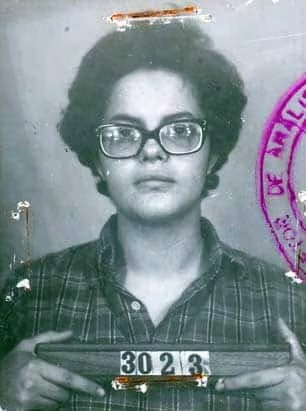
Brazil's Dilma Roussef: Criminal Radical To Criminal President
Rousseff's trajectory resembles the path of other Latin American leftists: segueing from a violent youth to economic failure in power.
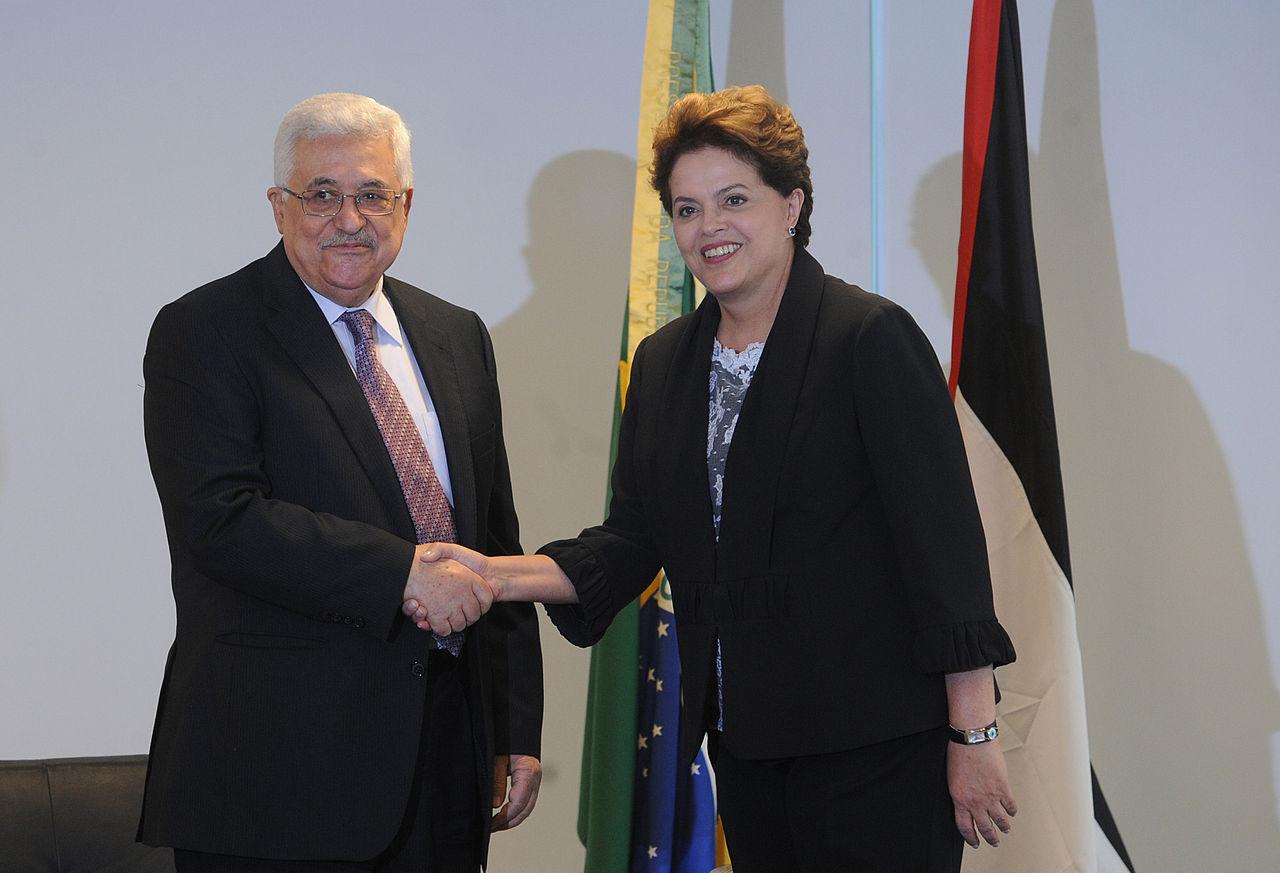
Dilma Rousseff and Mahmoud Abbas.Credit: Antonio Cruz, Agencia Brasil, Wikimedia
Dilma Rousseff went from being a criminal to the presidency of Brazil, without ceasing to be a criminal. The former president is not the serious technocrat that progressive marketing sold her as. She is a classic product of the Latin American armed left, which, defeated by violence, recycled itself into institutional power without abandoning its authoritarian reflexes.
She was born on 14 December 1947 and, at the age of 20, was already involved in urban guerrilla organisations fighting the Brazilian military regime. They did not just hand out leaflets. They participated in assaults, sabotage and clandestine structures. Rousseff was active in the communist Política Operária (Polop) and later in groups such as VAR-Palmares, a Marxist organisation that defended armed struggle as a legitimate means of resistance. The narrative sugarcoats this period by calling it resistance and a thousand other idiotic things, as if the damage done to civilians and facilities at the time were a fairy tale; the facts proved it was armed subversion.
Rousseff was captured in 1970. She spent nearly three years in prison, interrogated and tortured. That suffering, which was real, later became untouchable political capital. Since then, any criticism has been presented as an attack on a victim, not as an examination of a leader. The left learned a super-effective trick there. A violent past is washed away with martyrdom.
After leaving prison, Rousseff did not reconcile herself with liberal democracy. She adapted. She studied economics, entered the state bureaucracy and in the 1980s helped found the PDT, the party that inherited statist populism. In 2000, she jumped ship to the PT, the perfect apparatus. Lula da Silva made her his political protégée. Minister of Energy in 2003, chief of staff in 2005. She was never elected to these positions. She was always handpicked. Her management was dull, rigid and authoritarian. Centralising, hostile to dissent, incapable of dialogue outside the script.
As president (2011-2016), she deepened statism, manipulated public accounts, maintained artificial subsidies and falsified fiscal accounting to maintain the narrative of success. The Brazilian economy entered a historic recession in 2014-2016, with inflation, unemployment and falling GDP. It was not just a legacy. It was ideological management. The Petrobras scandal exploded under her mandate. Although personal enrichment was not proven, Rousseff was politically responsible for the largest institutional corruption system in Brazil's history. She looked the other way while the PT financed power with public money. The left once again used its favourite alibi. She didn't steal personally, so nothing happened. Structural corruption doesn't count. In 2016, Congress impeached her for crimes of fiscal responsibility. It was not a coup, no matter how much the narrative screams it. It was a constitutional process, with a parliamentary vote and judicial oversight. The left needed another martyr. It manufactured one. Rousseff went from incompetent to democratic heroine overnight.
Her trajectory is clear:
- Revolutionary violence in her youth
- Closed bureaucracy in her maturity
- Economic failure in power.
And in the end, permanent victimisation. Never self-critical. Never responsible. Dilma Rousseff does not represent overcoming the armed past. She represents its normalisation. The message is dangerous and constant in Latin America, unfortunately. If yesterday you took up arms for the right cause, or for what you believed you were defending, tomorrow you can ruin a country and still demand applause.