The Clash Of Civilizations In The Strait Of Hormuz, 400 Years Ago
: A forgotten chapter of history reveals how a barren island at the edge of the Persian Gulf became a jewel of empire—and a lesson in the fleeting nature of worldly dominion.
“For what does it profit a man, if he gains the whole world and forfeits his soul?” (Mark 8:36). The question, posed by Our Lord, echoes even in the history of empires. For a brief moment in the early modern age, the Catholic monarchies of the Iberian Peninsula held sway over one of the most strategic points on earth: the Strait of Hormuz.
For forty-two years, this narrow passage at the mouth of the Persian Gulf—through which flowed the riches of the East—stood under the authority of Catholic kings. Today, that episode is almost entirely forgotten.
The story begins with Afonso de Albuquerque, the formidable Portuguese commander who seized the island of Hormuz in the early sixteenth century and secured it definitively in 1515. The island was famed in its time as a jewel of the world—“the world is a ring and Hormuz its precious stone.” Albuquerque fortified the enclave and entrusted it to the protection of Our Lady of the Conception, a gesture that reflected the inseparability of faith and mission in the Portuguese expansion.
From the outset, this was not merely a commercial enterprise. It was part of a broader vision—imperfectly realized, yet deeply felt—of a Christian order extending beyond Europe. That vision took on new form in 1580, when the crowns of Portugal and Spain were united under Philip II in the Iberian Union. For a time, a single Catholic monarch governed territories stretching from the Americas to Asia, including Hormuz and the strait it commanded.
In those years, the defense of trade routes could not be separated from the defense of Christendom itself. Charles V had already confronted the immense challenge posed by the Ottoman Empire under Suleiman the Magnificent, whose fleets dominated the Mediterranean and whose ambitions threatened Christian Europe. The victories at the Great Siege of Malta and the Battle of Lepanto were seen not only as military successes but as signs of divine favor—moments when, in the words of the Psalmist, “the Lord gave victory to His anointed” (cf. Psalm 20:6).
Hormuz, though distant, was part of this same struggle. By controlling the strait, the Iberian powers secured the flow of spices and goods from India—commodities so valuable they were weighed against gold—while also maintaining a strategic position against their rivals. Yet the island itself was austere: a barren outcrop of salt and stone, dependent on supplies from the mainland. Its wealth lay not in its soil, but in the currents of trade that passed through it.
Still, even in such a place, the Church was present. From Goa, the center of Portuguese Asia, missionaries journeyed to the Persian Gulf. Francis Xavier had earlier sent Jesuits to the region, while Augustinian friars established missions that reached into Persia itself. Their labors remind us that wherever commerce and empire extended, so too did the effort—however fraught—to proclaim the Gospel.
Yet no earthly arrangement, however grand, is immune to division and decline. The unity of the Iberian crowns proved difficult to sustain in practice. Spain’s burdens in Europe multiplied, while new maritime powers emerged. The Dutch East India Company challenged Iberian dominance in Asia, and England likewise sought to weaken it.
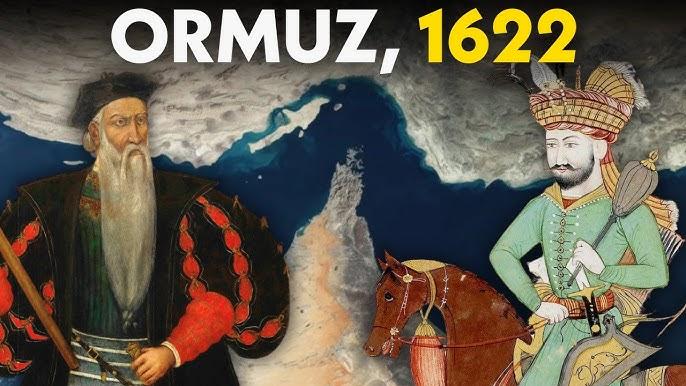
The end came in 1622. Abbas I of Persia, once aligned in opposition to the Ottomans, turned against Hormuz. With English support, his forces captured the island, bringing an end to Iberian rule. The news took a year to reach Madrid—a delay that itself testified to the immense distances and growing fragility of the empire.
In the years that followed, trade shifted to the mainland port of Bandar Abbas, and Hormuz faded into obscurity. The jewel lost its luster.
What, then, are we to make of this forgotten chapter? It reveals both the extraordinary reach of Catholic monarchies and their inherent limits. For a time, a single sovereign presided over a global domain in which the Cross was carried alongside the banner of empire. Yet history reminds us that such dominion is fleeting.
“The grass withers, the flower fades, but the word of our God will stand forever” (Isaiah 40:8). The forts of Hormuz have crumbled, and the empires that built them have passed away. But the faith carried across those seas—often by humble missionaries rather than mighty kings—endures still.