Labor Icon Cesar Chavez Is Alleged To Have Sexually Abused Minors
Chavez was a reputedly pious Catholic, in addition to being an icon of the Democratic Party and the labor movement.
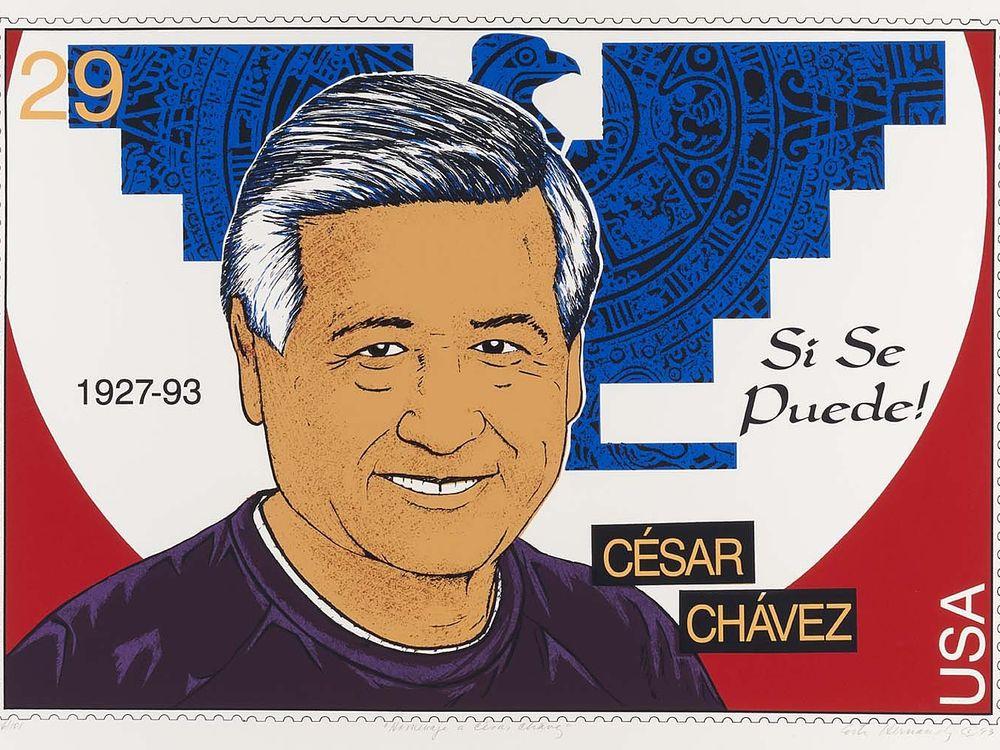
Cesar Chavez, long celebrated for his advocacy of the human rights of migrant farm laborers, will not be commemorated this year by the United Farm Workers, the labor union he founded.
Cesar Chavez Day is a a federal commemorative date typically noted on March 31 since 2014. According to a UFW statement, allegations that the famed civil rights leader had once “engaged in inappropriate sexual behavior with women and minors.”
UFW’s statement says “we do not have any firsthand knowledge of these allegations,” and added that “the allegations are serious enough that we feel compelled to take urgent steps to learn more and provide space for people who may have been victimized to find support and to share their stories if that is what they choose.” The union has cancelled this month’s Cesar Chavez Day activities, saying the allegations are “against everything that we stand for.” It said that some of the allegations stem from “family issues, and not our story to tell or our place to comment on.”
Chavez was born in 1927 into a Mexican-American family in Yuma, Arizona, and was a farm laborer. In the mid-1960s, he organized fellow farm workers and led the California grape strike. He was celebrated as an advocate for the civil rights of farm laborers, especially Mexican-Americans. In the run-up to the 1968 presidential election, Democratic candidate Robert F. Kennedy Sr. consulted Chavez about the working conditions of migrant workers, visiting the civil rights leader in a widely publicized visit in California, binding Chavez to the progressive wing of the Democratic Party. Streets in Portland, Oregon, and Flint, Michigan, for instance, bear his name, as do numerous schools.
In a statement released on March 18, UFW co-founder Dolores Huerta (96) claimed she kept the allegations silent for 60 years out of concern that her words would hurt the movement. Huerta alleged she had two sexual encounters with Chavez. In one, she said she was “manipulated and pressured,” while in another she was “forced against my will.” The alleged rapes resulted in pregnancies. The children were farmed out to other families.
“I carried this secret for as long as I did because building the movement and securing farmworker rights was life’s work. The formation of a union was the only vehicle to accomplish and secure those rights and I wasn’t going to let Cesar or anyone else get in the way.” She added, “César’s actions do not reflect the values of our community and our movement,” Huerta stated. “The farmworker movement has always been bigger and far more important than any one individual. César’s actions do not diminish the permanent improvements achieved for farmworkers with the help of thousands of people. We must continue to engage and support our community, which needs advocacy and activism now more than ever.” Huerta, like Chavez, has been a regular supporter of the Democratic Party and has been featured at conventions and conferences. At least two other women have come forward with rape allegations.
Several organizations, including Voto Latino and LULAC deplored the allegations, stating that “no individual, regardless of statue or legacy is above accountability.” Voto Latino said it does not erase the work done by the thousands who built the farmworker movement. “The women who organized, marched, and sacrificed alongside farmworkers carried this movement on their backs,” Voto Latino said. “Dolores Huerta — a fighter, a giant of the labor movement, and someone who is among the survivors of this abuse — helped build everything this movement stands for.” On March 18, U.S. Congresswoman Teresa Leger Fernández, who chairs the Democratic Women’s Caucus, stated that she was heartsick and deeply disturbed by the allegations that girls were abused by Chavez. The New York Times released an investigation of the allegations on March 18.
The Cesar Chavez Foundation stated on March 17 that it was “deeply shocked and saddened” about the allegations that Chavez had “engaged in inappropriate sexual behavior with women and minors during his time as President of the United Farm Workers of America (UFW).” It stated that it is joining with the UFW to create “a safe and confidential process” for those wishing to speak about enduring “historic harm, and, if they choose to, participate in efforts toward repair and reconciliation.” Arizona Gov. Katie Hobbs’ office reportedly released a statement about the “troubling allegations,” stating that it would “not recognize Cesar Chavez Day this year. Our thoughts are with the victims and all those affected.” Celebrations in Texas and Michigan have also been cancelled.
Chavez was a pious Catholic. He once said, “I think there are three elements to my faith. It’s God, myself, and my brother. I’m traditional. I’m Catholic traditional. I go to Church regularly and faithfully . . . But besides that, I also have what I consider as a renewal religion. I go out and do things. That’s what I think is a real faith, and that’s what I think Christ really taught us: to go do something. We can look at His sermon [Sermon on the Mount] and it’s very plain what He wants us to do: clothe the naked, feed the hungry and give water to the thirsty. It’s very simple stuff and that’s what we’ve got to do.”
In 2017, the California Catholic Conference noted Cesar Chavez Day, stating: “Today is Cesar Chavez Day, and while most know Chavez as a crusader for migrant farm workers, it is less known that it was his Catholic faith and love of Christ that drove his unyielding commitment to improving conditions for the poor. It was a Catholic priest that Chavez met who ministered to Mexican American migrant workers who ignited his lifelong passion. The priest told Chavez about Catholic teachings concerning the rights of workers. According to the United States Catholic Catechism for Adults Chavez said, “I would do anything to get Father to tell me more about labor history. I began going to the bracero (guest worker) camps with him to help with the Mass, to the city jail to talk to the prisoners, anything to be with him.”
Chavez advocated for migrant workers, who pick crops across the U.S., such as cotton, apples, lettuce, and grapes. He said, “We must never forget that the human element is the most important thing we have—if we get away from this, we are certain to fail.” Chavez added: “It is more than a union (UFW) as we know it today that we have to build. It is movement of the poor . . . We know that our cause is just, that history is a story of social revolution and that the poor should inherit the land.”
The U.S. Postal Service issued a commemorative stamp of Chavez in 2003. California became the first state to establish March 31, Chavez's birthday, to commemorate his legacy, while President Barack Obama proclaimed in 2014 a national Cesar Chavez Day. Obama also awarded the Presidential Medal of Freedom to Dolores Huerta. Chavez died in California in 1993 at age 66.