Something Went Terribly Wrong In Disrupting A Church Service In Minnesota
Protest has its place, but invading worship crosses a red line and endangers liberty of conscience.
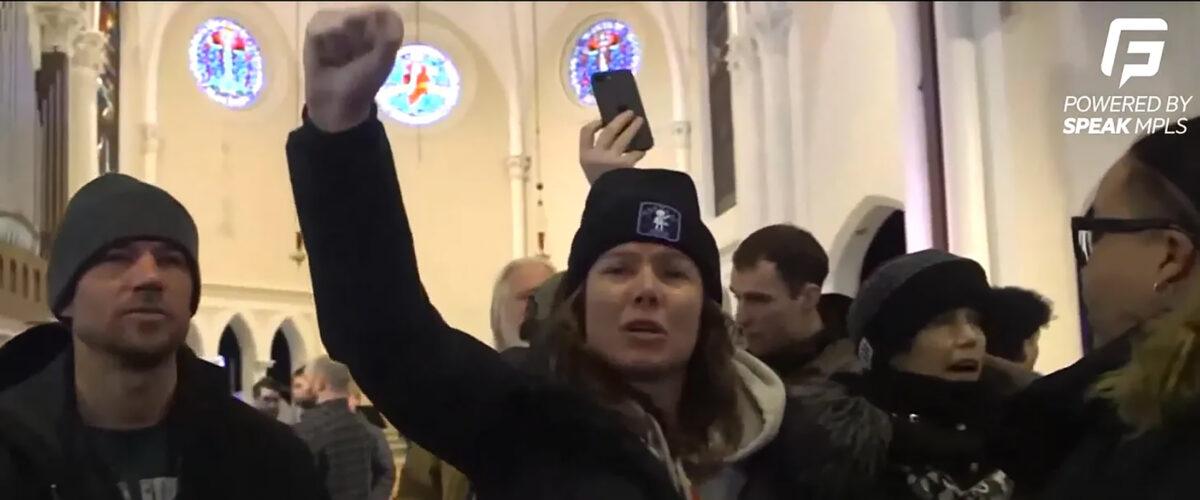
The recent disruption of a worship service in St. Paul, Minnesota – celebrated by some as a morally justified protest – raises a question that extends beyond politics or immigration policy. It is a question about moral authority, restraint, and whether any cause grants permission to violate sacred space.
History offers a sobering parallel.
Before he became the apostle Paul, Saul of Tarsus was utterly convinced that his actions were virtuous and obligatory. Acting under a sincere moral conviction, he persecuted Christians, imprisoned believers, and approved of violence against them – all while believing he was defending the truth. He was later forced to confront a hard reality: moral certainty, when detached from a higher authority and restraint, tends to become destructive. Sincerity did not justify his actions; it condemned them.
That lesson is not confined to history.
The interruption of worship in St. Paul followed the same pattern. Those involved believed their cause was urgent and morally superior. That belief became the justification for intrusion, intimidation, and disruption. But when people assume that the strength of their moral conviction authorizes them to override boundaries – especially boundaries tied to conscience and religious practice – something has gone terribly wrong.
The Bible, most often overlooked in modern discussions, offers a striking insight: human anger and moral fervor must be restrained, because judgment does not belong to crowds or causes, but to God alone. This principle is not theological trivia; it is a safeguard against assumed morality, which is an overreach disguised as righteousness. Societies unravel when such zeal replaces restraint.
There is an added irony in this case. The city where this occurred bears the name St. Paul – the very figure whose life stands as a warning against persecuting others in the name of a supposed virtuous cause.
The pastor of the disrupted church responded wisely, calling the act “shameful” and reminding the public that worship services exist for reflection, repentance, and devotion – not ideological confrontation. That response deserves broader support, even from those who disagree with the church’s beliefs.
A free society depends not on unanimity, but on restraint. Protest has its place. So does dissent. But invading worship services crosses a line that should concern anyone who values religious freedom or liberty of conscience.
When causes are devoid of humility, they do not produce justice; they produce coercion. History and Scripture both testify to that truth.
Rev. Mark H. Creech is Director of Government Relations for Return America and has spent more than 45 years engaging faith and public policy in North Carolina.