Jihadi Islam Assails Ancient Ethiopian Christian Community
Christians, especially converts, are vulnerable in Ethiopia as Islam flexes its muscles.
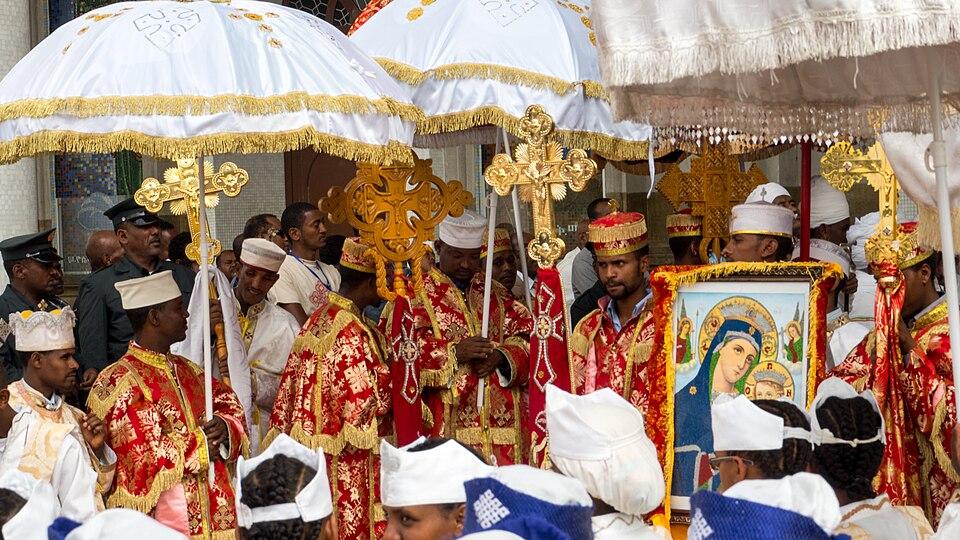
Part 1: Islamic Threats: The ethnic-religious violence against Ethiopian Christians is ongoing amid a wider jihadist campaign that is targeting many nations in Africa.
Dozens of Ethiopians have been murdered in several religious- and ethnic-inspired attacks over the past several months. During late February and early March, for instance, militants carried out coordinated attacks in which over 30 people were killed in the Arsi Zone of Oromia, the largest and most populous region in Ethiopia, according to church officials who spoke to the BBC.
Christians in the country are mainly targeted by two groups: Islamic forces and far-left groups, with the complicity of the government and local authorities.
The first part of this series analyzes the Islamic groups targeting Ethiopian Christians. The second part concerns the Marxist and other far-left groups, as well as the ethnic-based violence they are facing.
Ethiopia ranks 36 out of 50 in the World Watch List of Open Doors, which monitors the persecution of Christians around the world. “Persecution in Ethiopia is complex and multifaceted, shaped by a blend of historical legacies, religious dominance, regional dynamics, and ongoing political instability,” according to a 2026 country report by Open Doors.
The Arrival of Islam
How did Islam arrive in Ethiopia, a historically Christian country, and grow there to the point that it is now a major source of persecution for Christians? Ethiopia is a country located on the Horn of Africa and has a population of approximately 138 million people. It is home to a diverse array of cultures and ethnicities: it has over ninety distinct ethnic groups with unique languages and traditions. Ethiopia established Christianity as its official state religion in the early fourth century (circa 330–340 AD) under King Ezana of Aksum. Based on church tradition, Ethiopia’s conversion to Christianity is traced to the Ethiopian eunuch, a high-ranking official baptized by the Apostle Philip (according to the New Testament’s Book of Acts).
This move established the Aksumite Empire (modern Ethiopia and Eritrea) as a major early Christian power, and the faith has been integral to the region’s culture ever since. The Ethiopian Orthodox Tewahedo Church, whose origins trace back to the fourth century, is one of the world’s oldest. The Bible mentions Ethiopia multiple times, and the Ethiopian Orthodox Church maintains a rich, ancient tradition. Christianity has served as a unifying force which has for centuries shaped the literature, art, and identity of Ethiopia.
Islam, however, arrived in Ethiopia during the early seventh century, primarily through the First Hijra (613–615), when Muhammad (Islam’s founder) instructed his followers to leave Mecca and seek refuge in the Christian Kingdom of Aksum. Early Muslims settled in areas like Negash (Tigray), which became an important center for early Islamic history in Ethiopia. Between 1527 and 1543, Ethiopia faced repeated attacks followed by a military occupation from a Muslim sultanate. During this period, Ethiopia was occupied by a jihadist army raised from the Sultanate of Adal, which grew from the remnants of the Sultanate of Ifat in the late fourteenth century. Ifat was a medieval Sunni Muslim state in the eastern regions of the Horn of Africa between the late thirteenth century and early fifteenth century. It was formed in present-day Ethiopia in the region of Ifat. The Islamic kingdom ruled over parts of what are now Ethiopia, Djibouti, Somaliland, and Somalia.
The sixteenth-century jihad led by Imam Ahmad ibn Ibrahim al-Ghazi (Ahmad Gragn) of the Adal Sultanate aimed to conquer Ethiopia, resulting in widespread destruction of churches, forced conversions to Islam, and the temporary collapse of the Christian Ethiopian empire.
Habtamu Mengistie Tegegne, a professor of history, notes: “The jihad of Ahmad ultimately had as its object the conversion of Ethiopia to Islam. Śihāb ad-Dín, Ahmad’s Yemeni follower and chronicler, constantly referred to Ethiopians as ‘infidels,’ ‘polytheists,’ and ‘idol-worshipers’ who deserved to be fought, converted, and enslaved. With the exception of those located in inaccessible areas, all churches and monasteries were looted and razed to the ground and an estimated nine out of every ten Christians converted to Islam.”
During the Ethiopian–Adal War, Ahmad Al-Ghazi’s forces were Ottoman-backed and involved a coalition of several Islamic forces and ethnicities (at least six) that included Arabs, Somalis, Hararis, Harla, and a number of other tribes. In addition to genociding Christians and burning churches, they looted copious amounts of gold from the Ethiopian kingdom and are recorded (in Futuh al-Habasha) to have melted down a church entirely plated in gold leaf known as “Mekane Selassie” (Abode of the Trinity) in Amhara, a wonder which Ahmad’s forces said they had never seen the like of it anywhere, and which had taken the Emperor Na’od thirteen years to build.
The campaign was a major effort to establish dominance over the Christian Kingdom. This jihad, supported by Ahmad’s Muslim allies, resulted in heavy material, human, and territorial losses for Christians. According to historian Tegegne, “The Muslim seizure of Ethiopian provinces led to a tremendous expansion in the slave trade within the region, and included the enslavement and forced conversion of Christians… In fact, in the late fifteenth and sixteenth centuries, jihad was a primary method of obtaining Ethiopian slaves.”
Christianity’s Tenuous Comeback
The jihad ended in 1543 following the death of Imam Ahmad in battle against a combined Ethiopian and Portuguese force, restoring the Christian Solomonic dynasty. In 1548, King Gälawdéwos of Ethiopia issued a royal edict, now held at Tädbabä Maryam (an ancient monastery), which banned the sale of Christians to Muslims and other non-Christians. This decree sought to combat the intensified sixteenth-century slave trade, particularly after conflicts with the Adal Sultanate. Today, Ethiopia is a majority-Christian country (61%), with a large Muslim minority. Approximately 43% of the population identifies as Orthodox Christian, 33% as Muslim, and 20% as Protestant. In the eastern and southeastern regions, Islam is predominant.
Open Doors reports that Islam is increasing its influence in Ethiopia at local, regional, and national levels, placing Christian communities, especially converts, in a vulnerable position: “In Muslim-majority rural areas, Christians often face harassment, exclusion from communal resources, and violent attacks, some of them fatal. Converts from Islam are particularly at risk, frequently disowned by family, denied inheritance and child custody rights, and targeted for public shaming or assault.”
The spread of Islamic radicalism from neighboring countries like Somalia and Sudan has further deepened the threat, as cross-border radical networks affect Ethiopia’s border regions, adds Open Doors.
In an interview with this author, Tedla Melaku, an Ethiopian-American humanitarian advocate and author of the book Reason and the Sacred: Ethiopian Metaphysics said: “Ethiopia’s Christian kingdom, through its leadership, the Solomonic dynasty, successfully fought against Islamist powers and their expansion since at least the medieval period, protecting the Church: The Sultanate of Ifat in the 13th–15th centuries, and the Adal Sultanate, which it eventually defeated; it fought and overcame several regional emirates, prevented Ottoman expansion into the interior of Ethiopia, and defeated the Mahdists and the Khedivate of Egypt at war, too. Ethiopia’s ancient Christian tradition was preserved through resistance, martyrdom, and alliances with other Christian nations—namely, the Portuguese in the 16th century, who intervened to defend Ethiopia against the Ottoman-backed Adal Sultanate.
“Many Islamist attacks and invasions took place, resulting in forced conversions and the destruction of magnificent Christian monuments and relics as chronicled in the Futuh al- Habasha, a 16th-century Arabic chronicle detailing the Ethiopian–Adal war; but due to a strong Christian leadership that understood what was at stake, Ethiopian Christians were able to protect the Church and their Christian heritage through great sacrifices. The West could learn that what is at stake, when allowing Islamist expansion, is far greater than anything imaginable, and that Europe’s Christian civilization and identity must be protected at all cost, as it was in the past through its Christian kings and leaders. Christianity is to be protected by God-fearing, strong leaders.”
Uzay Bulut is a fellow at the Ideological Defense Institute.