Midway Through Lent, Christians Are Called To Humility And Love
Lord, we believe. Help our unbelief!
In today’s Gospel (Mark 9:17–31 - see below), Christ meets a father whose son is tormented by a spirit that throws him into chaos. The father’s cry, “I believe; help my unbelief!”, reveals the tension every disciple feels on the journey toward God. Jesus heals the boy, not through spectacle, but through a quiet authority that restores him to dignity and peace. When the disciples ask why they could not cast the spirit out, Christ responds that “this kind cannot be driven out by anything but prayer and fasting.”
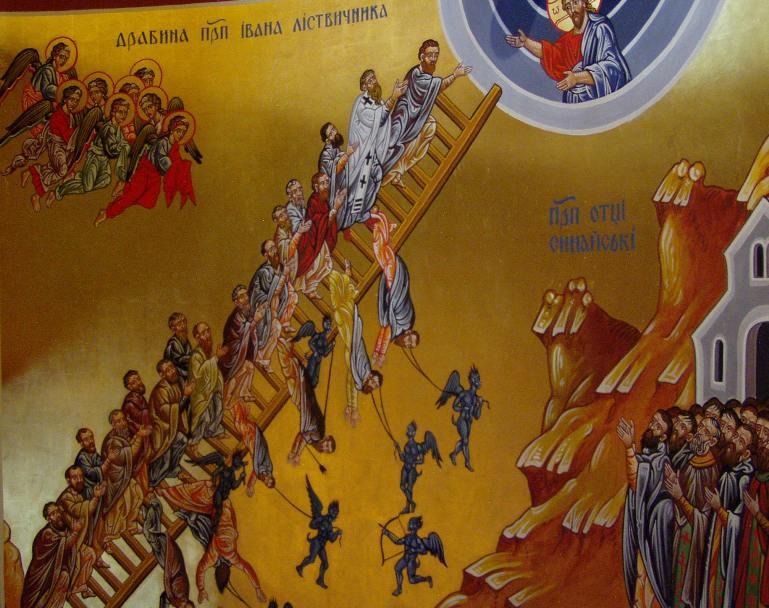
On the Fourth Sunday of the Great Fast, the Church also places this Gospel alongside the memory of St. John Climacus, author of The Ladder of Divine Ascent. His teaching mirrors the Gospel: the spiritual life is a climb, a struggle, a cooperation between our fragile faith and God’s strengthening grace. The father’s plea becomes the prayer of every climber on the Ladder…honest, humble, and hopeful.
For Byzantine Catholics, this Sunday reminds us that the Great Fast is not about absolute perfection but transformation. Christ meets us in the places where our faith falters, where our efforts fail, where our hearts feel divided. St. John Climacus teaches that prayer, fasting, humility, and repentance, are ways of opening ourselves to the healing Christ offers. The boy’s restoration foreshadows our own: Christ lifts us up, returns us to ourselves, and leads us forward.
Living the Gospel as Missionary Disciples
Pray the father’s words “I believe; help my unbelief”—whenever you feel overwhelmed, discouraged, or spiritually dry. Choose one small act of fasting this week (from food, screens, or distractions) and offer it for someone who is struggling. Practice humility in relationships by apologizing quickly, forgiving readily, or letting go of the need to be right. Take one “step on the Ladder” by setting aside a few minutes of silence each day to let Christ strengthen what feels weak in you.
Mark 9:17-31 Douay-Rheims 1899 American Edition
17 Who, wheresoever he taketh him, dasheth him, and he foameth, and gnasheth with the teeth, and pineth away; and I spoke to thy disciples to cast him out, and they could not.
18 Who answering them, said: O incredulous generation, how long shall I be with you? how long shall I suffer you? bring him unto me.
19 And they brought him. And when he had seen him, immediately the spirit troubled him; and being thrown down upon the ground, he rolled about foaming.
20 And he asked his father: How long time is it since this hath happened unto him? But he said: From his infancy:
21 And oftentimes hath he cast him into the fire and into waters to destroy him. But if thou canst do any thing, help us, having compassion on us.
22 And Jesus saith to him: If thou canst believe, all things are possible to him that believeth.
23 And immediately the father of the boy crying out, with tears said: I do believe, Lord: help my unbelief.
24 And when Jesus saw the multitude running together, he threatened the unclean spirit, saying to him: Deaf and dumb spirit, I command thee, go out of him; and enter not any more into him.
25 And crying out, and greatly tearing him, he went out of him, and he became as dead, so that many said: He is dead.
26 But Jesus taking him by the hand, lifted him up; and he arose.
27 And when he was come into the house, his disciples secretly asked him: Why could not we cast him out?
28 And he said to them: This kind can go out by nothing, but by prayer and fasting.
29 And departing from thence, they passed through Galilee, and he would not that any man should know it.
30 And he taught his disciples, and said to them: The Son of man shall be betrayed into the hands of men, and they shall kill him; and after that he is killed, he shall rise again the third day.
31 But they understood not the word, and they were afraid to ask him.