A Catholic Hospital Killed Rape Victim Noelia Castillo By Euthanasia
Catholic hospitals should embody the culture of life instead of assisting in the culture of death.
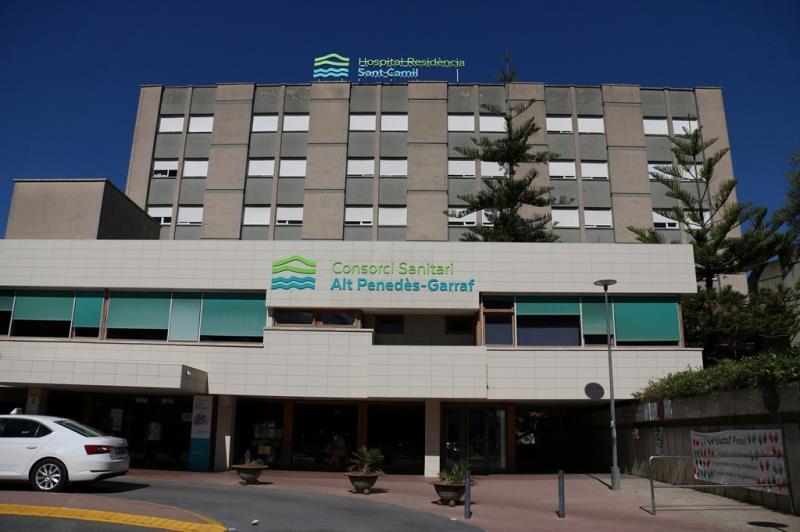
The Sant Camil Hospital-Residence, located in Sant Pere de Ribes in the Spanish province of Catalonia, is a religiously owned institution affiliated with the Order of the Ministers of the Sick—commonly known as the Camillian Fathers. Sant Camil originated as a healthcare facility sponsored by this Catholic order, established on land specifically donated for the purpose of providing charitable care. The center's history begins with a land donation made by Amanda Sagristà Colomé—widow of Josep Marcer Carbonell—with the express intention of building a residence for the care of those in need. Building upon this foundation, the Camillians first developed a residential care facility and subsequently a hospital, thereby creating a healthcare complex that, from its very inception, was inextricably linked to the spirituality and charitable mission of the Order. The objective was not merely to manage hospital beds or medical services, but rather to embody—within the healthcare setting—the distinctive charism of Saint Camillus de Lellis: caring for the sick with love, tenderness, and reverence for human life.
Religious Ownership, Public Management
Over time, the legal framework governing this institution underwent reorganization. In 2002, the Sant Camil Hospital-Residence Foundation was established by the Spanish Province of the Camillian Fathers to oversee the management of the complex. Subsequently, in 2009, the Foundation reached an agreement to transfer the operational management of patient care services to the *Consorci Sanitari de l’Alt Penedès i Garraf* (Alt Penedès and Garraf Health Consortium), thereby integrating the hospital into Catalonia’s public healthcare network. This organizational model remains in effect today: religious ownership vested in the Camillian Order, combined with public management administered through an agreement with the Catalan healthcare authorities. We are not dealing here with a purely public hospital in which the Church maintains merely an ancillary pastoral presence. Nor is this a facility that was once religious but has since ceased to be so entirely. What exists, rather, is a religiously owned hospital—structured through a foundation linked to the Camillians—whose day-to-day management has been entrusted to a public entity. The management is public; the work itself—its roots and its identity—remains Camillian.
Camillian Continuity: The 50th Anniversary
The Order itself expressly affirms this continuity. On October 18, 2025—marking the hospital’s 50th anniversary—the Camillian Religious, in conjunction with the hospital itself, organized a celebration of significant institutional and religious import. The centerpiece of the event was a Eucharistic celebration presided over by Msgr. Xabier Gómez, Bishop of Sant Feliu, attended by Dr. Olga Farré, the hospital’s General Manager; Fr. John Le Van, local superior of the Camillian community; and Br. José Carlos Bermejo, provincial superior of the Camillians in Spain and Argentina. What was said there is, today, impossible to ignore. José Carlos Bermejo affirmed that those present were “heirs to the good that others have done”—heirs to “so many hands and hearts that have built this place as a true temple of care.” He also paid tribute to the religious figures who had passed through the Sant Camil community, and he evoked the memory of Amanda Sacristán as a donor and driving force behind its construction, as well as that of Father Canet as the project’s initial champion.
Even more significant was the language employed to define the nature of the hospital. Bermejo maintained that at Sant Camil, “every gesture of care is a liturgy of service, an expression of the Kingdom of God,” adding that the hospital is “a sacred place where life, relief, and tenderness are celebrated every day.” He concluded his address with a phrase he identified as the institution’s emblem: “more heart in our hands—the wisdom of a heart that sees, discerns, and acts with compassion.” Bishop Xabier Gómez, for his part, expressed his gratitude for the legacy of the hospital’s religious staff and collaborators, and he encouraged the Camillians to keep their presence alive in Sant Pere de Ribes by “contributing the richness of the charism of tenderness and collaborating in the ministry of health and the humanization of care.”
The Noelia Case: The Rupture
This context renders the contradiction that has come to light today even more grave. For within that very hospital—presented by its own religious administrators as a “temple of care,” a “sacred place,” and a space where “life is celebrated every day”—the life of a 25-year-old woman named Noelia Castillo was taken; a young woman suffering from post-traumatic depression following a gang rape. Noelia was a young woman with a severe psychiatric condition. Her situation demanded precisely the opposite of what ultimately transpired: accompaniment, treatment, containment, and hope. Yet, it was at Sant Camil—a hospital under Catholic religious ownership—that euthanasia was administered to her. She was put to death in a facility that the Camillians themselves continue to claim as their own work and as an expression of their mission.
A Structural Inconsistency
It is not enough to simply state that the management is public. While that argument may delineate administrative responsibilities, it does not resolve the fundamental contradiction at play. For here, we are not speaking of a religious order providing spiritual care within a hospital owned by others, but rather of an institution that retains the historical and foundational ownership of the facility—one that upholds its core identity narrative and continues to participate in its institutional life. The question is straightforward: if Sant Camil is—as the Camillians claim—a “sacred place where life is celebrated,” how can it be deemed acceptable that euthanasia is practiced within those very same premises? If they remain present there—if they celebrate its existence and claim the institution as their own—can they truly wash their hands of what transpires inside by simply arguing that its management is under public control? This case compels a re-examination of the current model. For years, a convenient separation has been maintained between religious ownership and public management. Yet, when this separation leads to the killing of patients within the confines of a Catholic healthcare institution, the issue ceases to be a mere technicality and transforms into an untenable moral contradiction.
The Need to Rethink the Model
If a hospital is under Catholic ownership, it cannot be allowed to become a venue where euthanasia is practiced without suffering a severe breakdown in institutional coherence. And if the agreements signed with the State permit such an outcome, those agreements must be revised. This is not to engage in nominalist debates, but rather to restore a minimum level of consistency between what an institution claims to be and what it permits to take place within its own home.