The Dispute Between Pope Leo And Trump Is A Call To Clarity, Charity, And Courage
Francis, Pope Leo's predecessor, had nothing to say about the closing of churches and segregation of the unvaccinated during the COVID 'plan-demic'. Why does Leo take on a prolife president?
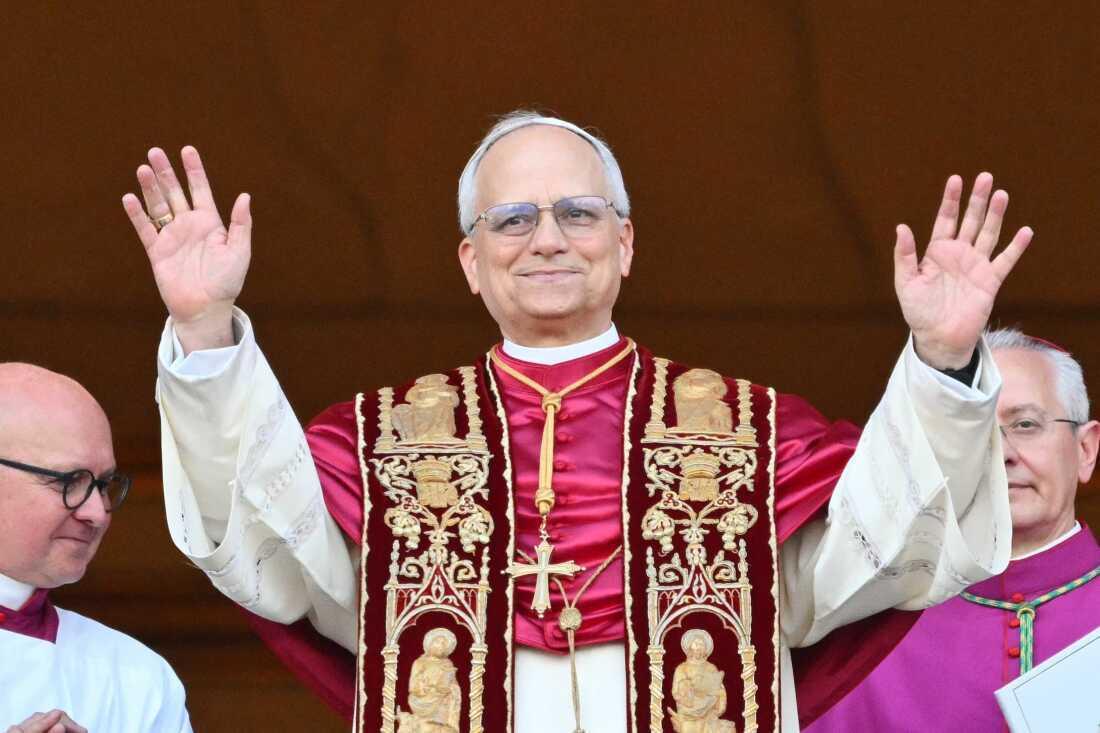
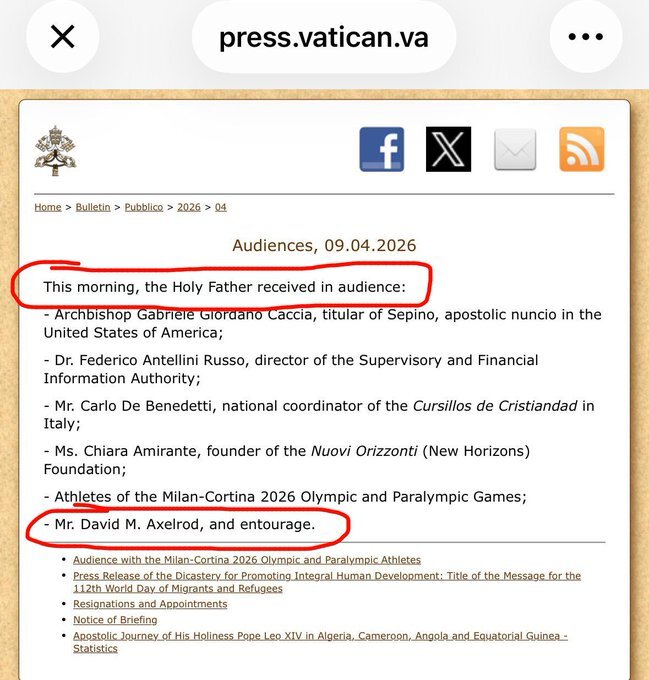
Recent events invite renewed reflection on the relationship between the Holy See, political power, and the faithful’s expectations of moral clarity. Reports that Pope Leo XIV met at the Vatican with Alex Axelrod, a chief strategist behind Barack Obama’s presidential campaigns, have circulated widely, with some suggesting that a meeting with the former president himself could follow. In the wake of that encounter, critics have pointed to what they perceive as a shift in tone toward the Trump administration, alongside media claims—later denied by the Vatican—that the Pentagon had issued a “threat” against the Pope. Such episodes, whether accurately framed or not, contribute to a growing sense among some Catholics that the Church’s public posture is entangled in political narratives that obscure rather than illuminate her mission.
This unease is not limited to diplomatic optics. It extends to questions about the Church’s witness during the COVID-19 crisis. Many faithful recall that widespread government restrictions led to the closure of churches and limitations on public worship, often with little explicit resistance from ecclesiastical authorities. Concerns were also raised about the treatment of the unvaccinated within Catholic communities, including the denial of religious exemptions—an issue that touches directly on the Church’s own teaching regarding conscience. For some, these experiences suggested an inconsistency between proclaimed principles and lived practice.
Similarly, the Church’s engagement with political leaders has drawn scrutiny. While public figures who identify as Catholic have advanced policies at odds with fundamental moral teachings—most notably on the protection of unborn life—critics argue that responses from Vatican leadership have at times appeared muted. This perceived reluctance to confront moral error in the public square has fueled accusations of selective emphasis and uneven application of the Church’s prophetic voice.
The governance of the Church herself has also come into focus. The removal of bishops known for their outspoken defense of doctrinal orthodoxy—among them figures who challenged prevailing cultural trends on issues such as abortion and gender ideology—has been interpreted by some as a discouraging signal. At the same time, there is concern that other churchmen, whose positions appear more accommodating to secular or ideological currents, have faced less scrutiny. Whether these judgments are fair or not, they reflect a deeper anxiety about unity, clarity, and justice within the Church’s hierarchy.
In this context, it is perhaps unsurprising that political voices have entered the debate with blunt criticism. Donald Trump, in his characteristic style, has not hesitated to accuse the Vatican of inconsistency. His rhetoric may lack refinement, but it resonates with those who feel that legitimate questions have gone insufficiently addressed. For Catholics, however, the task is not to align uncritically with any political figure, but to discern the substance of such claims in the light of truth.
The Church’s credibility has always rested not on political alliances, but on her fidelity to Christ and the coherent witness of her members. When actions and statements appear to diverge from that witness, even the perception of inconsistency can become a stumbling block for the faithful. What is needed now is neither defensiveness nor partisanship, but a renewed commitment to clarity, courage, and charity—so that the Church may speak with a voice that is unmistakably her own, and unmistakably rooted in the Gospel.
William Donohue of the Catholic League reflected: "There will no doubt be occasions where the pope and the president will continue to make public their disagreements. But there are so many other issues, such as religious liberty, where the two share a common interest. Let’s pray the latter prove to be controlling."
Pope Leo and the Catholic bishops of the United States would do well to consult lay American Catholics, of whom 55 percent voted for Trump, on issues such as war, immigration, and foreign policy, all of which there can be prudential differences. As for Epic Fury: the war in Iran, Donohue wrote: "Pope Leo’s desire for peace is understandable. Less understandable was his sweeping statement on March 1 claiming that peace is achieved 'only' through “dialogue.” That is simply not true. Historically, war has frequently resulted in peace, an outcome that comes about when dialogue fails. That is why the Catholic Church is not a pacifist religion—it understands the necessity of “just wars.”