New Mammalian Species Discovered In Argentina
Living in central western Argentina, the newly discovered rat lives on bromeliad plants, which are also adapted to harsh alpine environments.
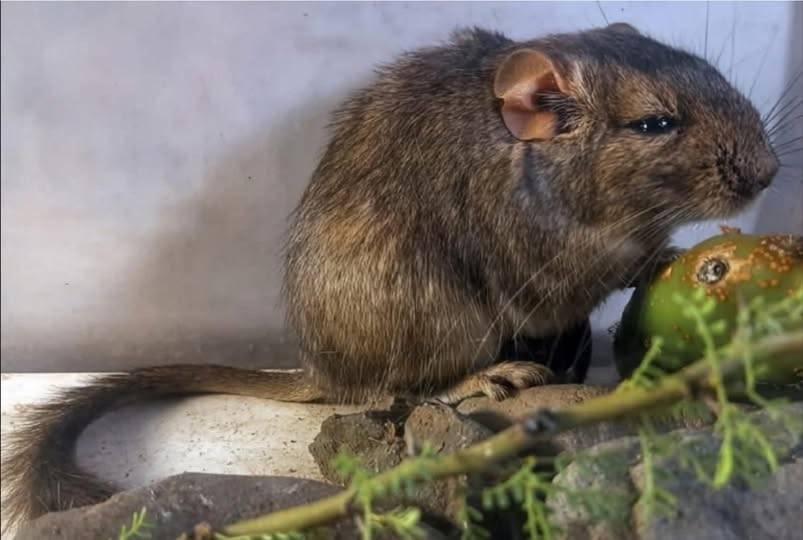
Apnotomys conicetorum
A team of Argentine scientists has discovered a previously unidentified species of mammal in southwestern Argentina. Found in the Traslasierra National Park in the Andean province of Córdoba, this long-tailed vizcacha rat has been given the taxonomic name Apnotomys conicetorum. It lives in dry, rocky environments of the Guasapampa mountain range, feeding mostly on plants adapted to the high altitudes.
The discovery represents a major advance in the understanding of Argentina's biodiversity and demonstrates that previously undescribed species still exist within the country's protected ecosystems. It also underscores the importance of protected natural areas and scientific research for documenting and conserving native wildlife.
The newly discovered species bears its name in recognition of the work carried out by Argentina's National Scientific and Technical Research Council (CONICET) and the National Parks Administration (APN). Researchers describe the small rodent as an “acrobat” because of its ability to move deftly among the rocky formations characteristic of the Guasapampa range. Its thick fur allows it to withstand the temperature variations in the alpine environment. It is related to other members of the Cavimorph family, which includes South American porcupines, cavies (guinea pigs), vizcachas, chinchillas, and capybaras.
Its habitat lies within the forests of Traslasierra National Park, where it finds shelter among rock crevices and outcrops. The bromeliads it feeds on include the spiny Puya raimondii, thus setting it apart from related rodents. The rodent appears to be restricted to the Sierra de Guasapampa region in central Argentina. It is characterized by a long and very hairy tail, grayish-brown hair on its back, which contrasts with its white belly. Specimens were captured on rock-strewn slopes featuring abundant bromeliad vegetation.
The newly discovered rodent feeds on bromeliads native to the Andean regions of Argentina, which are incredibly resilient, cold-hardy, and drought-resistant plants that thrive in high-altitude valleys, rocky outcrops, and arid mountainous environments. Hardy and sun-loving, these plants have adapted to extreme temperatures and harsh mountain weather. Notable species in Argentina include Puya raimondii, which are towering, barrel-shaped plants reminiscent of the saguaro cactus of the American Southwest and related to the pineapple.
The discovery was made possible through the collaboration of researchers Pablo Teta, Agustina A. Ojeda, Andrea P. Tarquino Carbonell, J. Raquel Alvarado-Larios, Pablo Cuello, Paula Cornejo, Julián Mignino, Ricardo A. Ojeda, and Diego H. Verzi, who represented institutions including the Argentine Museum of Natural Sciences, IADIZA-CONICET, IDACOR-CONICET, the National University of Córdoba, and the National University of La Plata. The researchers noted that their discovery demonstrates that Argentina's biodiversity still holds many species waiting to be discovered, even among mammals, one of the best-studied groups of animals in the world. They also emphasized that conserving native forests and supporting scientific institutions such as CONICET and the National Parks Administration are essential for continuing to explore and protect the country's natural heritage.
The official description of the species was published in the scientific journal Vertebrate Zoology, where the taxonomic and ecological details of this new mammal have been formally documented.