Spanish Statesman Calls For Action To Stem Crisis Over Moroccan Invasion
Trillo-Figueroa, a former defense minister, demands Morocco take back border-crossers and admit responsibility for invasion and occupation of Spanish overseas territory Ceuta.
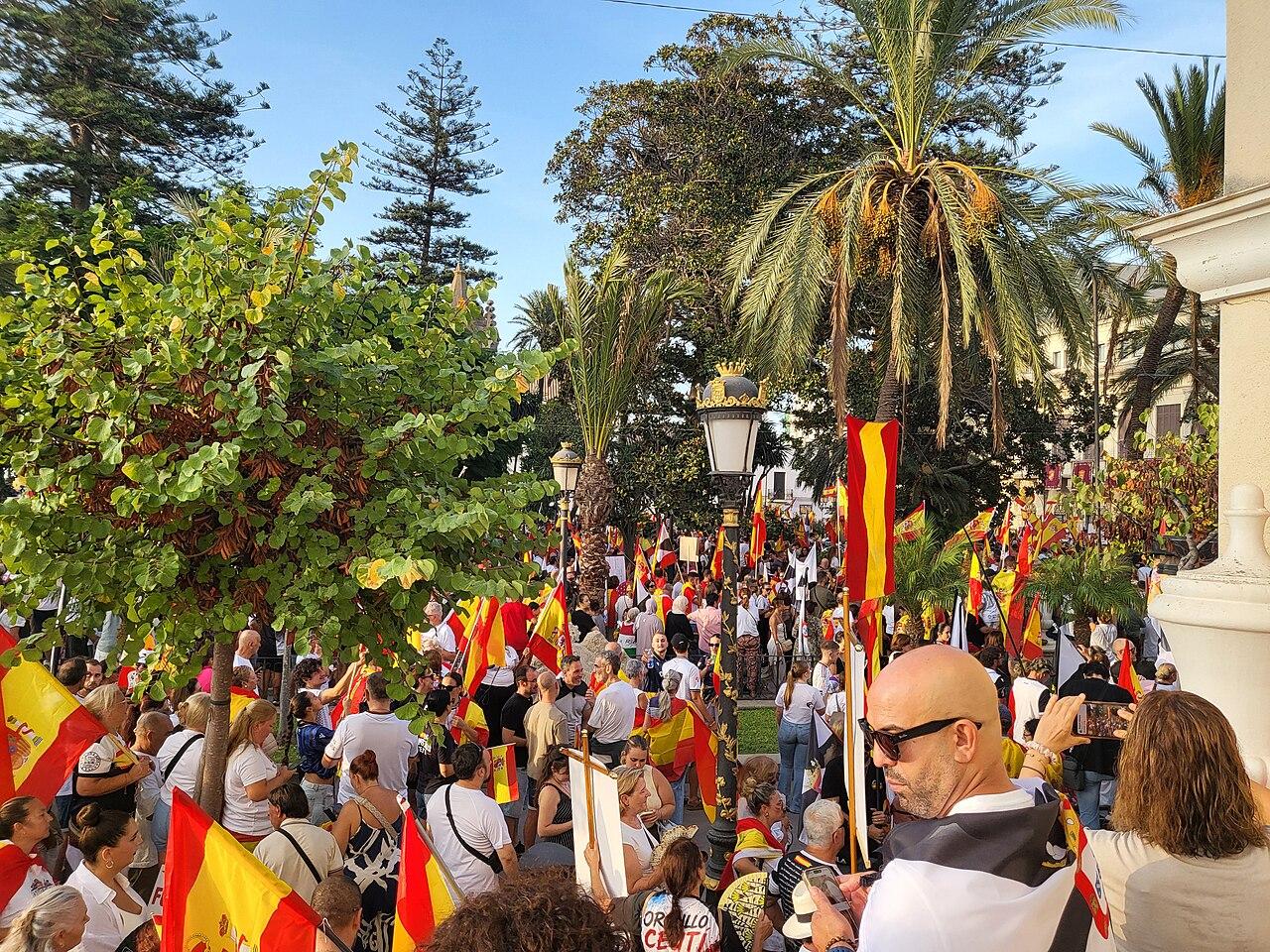
Former Defense Minister and former President of Spain’s Congress, Federico Trillo-Figueroa, is making the argument that Spain’s socialist government should declare a state of emergency in Ceuta: the overseas territory on the Mediterranean shore of North Africa that has been part of Spain since the 1600s. He wants the government, headed by Prime Minister Pedro Sanchez, who leads a leftist coalition, to take action against Morocco before international bodies and courts over the mass influx of largely Moroccan occupiers on July 30 and 31.
Initial reports of the wave of mostly male border-crossers estimated they numbered as many as 70,000. Many have remained, but enumeration of them has remained sketchy. Spanish official media estimates their number at about 5,000. Many of the so-called migrants have set up shanties at the Trampolin beach in Ceuta, even while residents have repeatedly burned them out. Spanish troops, rather than halting the mass influx, are building shelters for the invaders. The Red Cross and leftist NGOs are on hand providing food water, cellphones, and charging stations to the invaders.
In an interview with Europa Press, Trillo-Figueroa maintained that the situation in the autonomous city of Ceuta constitutes an “invasion” and argued that the government’s response must take place both domestically and internationally. Migrants from Africa have long crossed the narrow Straits of Gibraltar in frail boats. Recent videos and reports indicate that some are crossing in fast-boats, which are advertised to Moroccans on social media. Meanwhile, the Spanish military is building temporary shelters for the migrants in Ceuta. Non-profits, such as the Red Cross, are providing food, cellphones, and charging stations free of charge to the migrants. Meanwhile, Moroccan and African migrants, many of whom are military-age males, are building shanty towns on Ceuta's beaches, raising concerns about sanitation and outbreaks of disease. There have been reports of rapes and home invasions committed by the migrants. Estimates as to the number of migrants currently in Ceuta vary from 5,000 and upwards. On social media in Arabic, Moroccans are being called to occupy and seize Ceuta and sister city Melilla. There have been claims in Morocco that Ceuta and Melilla are Spanish colonies, even though the Spanish presence predates the current Kingdom of Morocco by several centuries. In 1976, masses of Moroccans moved into Spanish Morocco in Northwestern Africa, making it a part of modern-day Morocco.
According to Trillo-Figueroa, a declaration of a state of emergency would allow for deporting illegal aliens. In recent years, Spain’s socialist government gave citizenship to hundreds of thousands of foreigners, many of whom had entered illegally from North African and South Asian countries. The former defense minister argued that this extraordinary constitutional mechanism would provide exceptional tools to address a situation he considers abnormal. He says that Spain must hold Morocco accountable in appeals to the European Union and the United Nations.
Trillo-Figueroa said that the deaths and crimes that occurred during the mass influx, and in its aftermath, should be investigated to determine culpability. He added that the government has not acted with the necessary firmness toward Morocco during the weeks following the events that took place at the Ceuta border.
The former minister was especially critical of Prime Minister Pedro Sánchez, whom he accused of complacency in the face of Morocco. Trillo-Figueroa asserted that the Muslim country played a decisive role in the mass influx of migrants and claimed that there is sufficient evidence to support this argument. He cited statements made by Moroccan political leaders regarding Ceuta and Melilla, as well as various reports and probes that have come to light in recent weeks. He also questioned the government’s account regarding the lack of prior warnings and asserted that there were intelligence reports and reports from security forces warning of risks at the border.
Trillo-Figueroa expressed his support for the investigation opened by the National Court into the events in Ceuta. He said it is up to the courts to clarify both the circumstances surrounding the mass influx and the extent to which the various governmental agencies involved may have had advance notice. He said that it is premature to comment on the prime minister’s specific potential criminal liability while the judicial investigation is still ongoing.
Notably, Trillo-Figueroa gave credit to current Defense Minister Margarita Robles, who gave statements last week about reports prepared by Spain’s intelligence agency. Trillo-Figueroa said Robles had performed “an act of courage” by publicly acknowledging that the intelligence agency had indeed released information related to the situation at the border. Admitting the existence of these reports, he said, helps preserve the credibility of the Spanish intelligence service in the eyes of other international organizations.
Regarding a possible visit by King Felipe VI to Ceuta this month, Trillo-Figueroa said such a visit is up to the government to decide, even while the king remains head of state if not of government.
While politicians continue to debate over the influx of foreigners in Ceuta, and finger-pointing has raged in the press, at least some residents of Spanish Ceuta appear to have made up their mind about the future. September, Trillo noted that a decision of that nature must be made with the government’s approval, as required by the functioning of a parliamentary monarchy.
The former minister’s statements come at a time when the political debate continues over the causes, consequences, and responsibilities arising from the mass influx that has dominated the news in Ceuta in recent weeks. In a Sigma Dos survey commissioned by El Mundo newspaper of Spain between August 26 and 31, 33.4% of Ceuta residents admit to plans to leave the city following the events of July 30. However, this figure—which reflects the state of anxiety in which Ceuta’s population finds itself—varies greatly by age group. The reactions of young and old differ significantly, just as ideology and religion shape perceptions of the emergency.