Analysts See A Stark Choice For Mexico: Become A Partner Or Enemy Of the U.S.
A think tank portrays US/Mexico relations as neither a commercial idyll nor a geographic inevitability. Instead, it describes how the USMCA no longer suffices for Mexico because US security concerns reign supreme; Mexico sits at the center of a conflict involving the retreat of globalization, MAGA, and China's resolve.
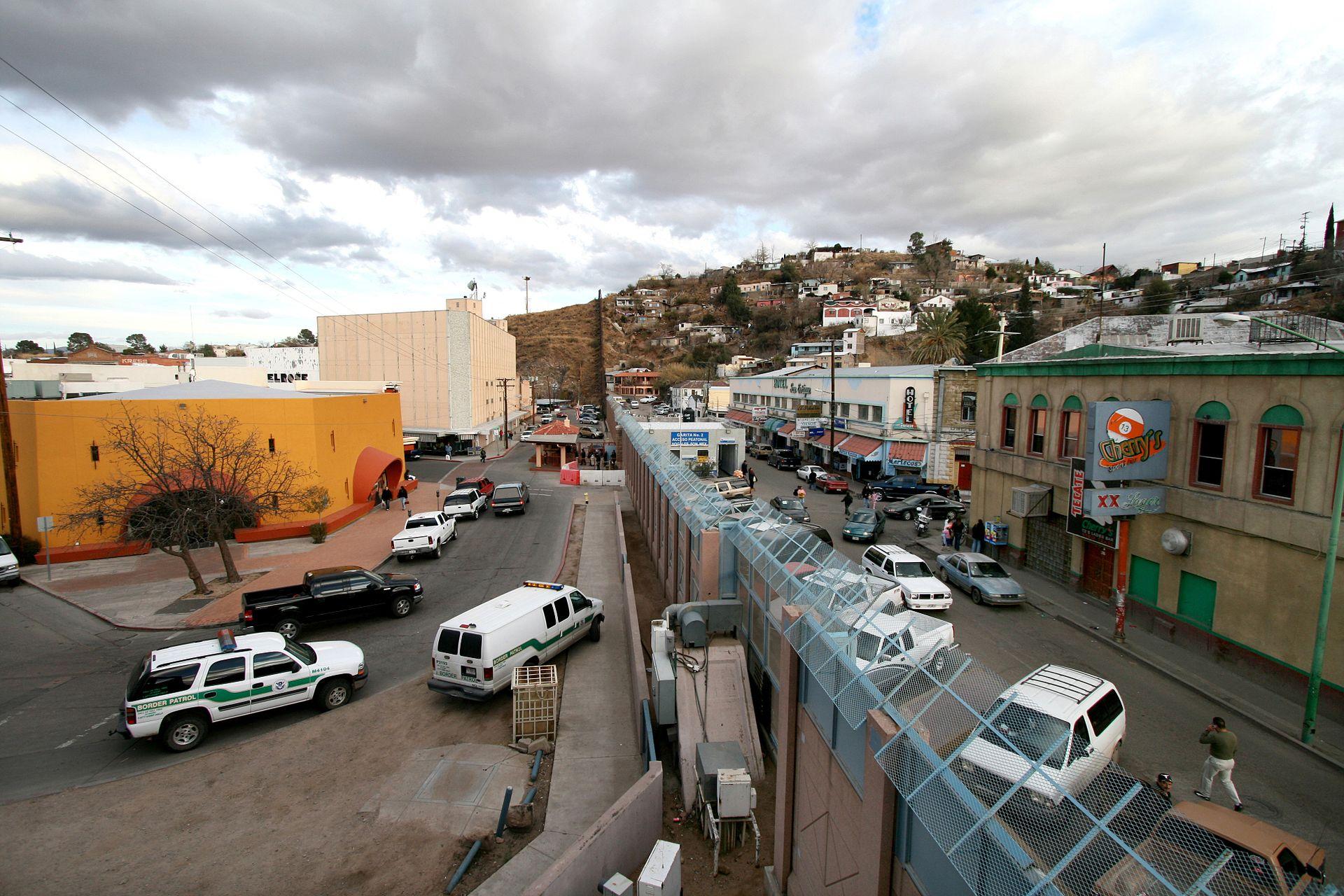
The Mexican Observatory for Catholic Citizenship and Social Analysis think tank has published its 70th report, titled The “Mexico-United States” Relationship Today: Elements for Discernment. This document, which was drafted from a lay perspective and aims to provide an ethical reading of the current situation, goes beyond merely describing bilateral trade. It posits a more challenging thesis: the fact of being neighbors is no longer just a matter of treaties; it has become part of a geopolitical realignment in which Mexico could emerge as a multi-strategic partner or be treated as an adversary.
The opening premise is not a statistical figure but a quote from Leo XIV in Magnifica humanitas (no. 185). The Pope describes a “culture of power” defined by polarization and violence, as well as a “modern Babel” that extends beyond the technocratic paradigm: it also encompasses the clash between competing imperialisms vying for supremacy. Against this backdrop, the Observatory poses three questions: is the relationship with the United States a blessing or a stumbling block today? What is the new U.S. strategy amidst the retreat of globalization, and where does Mexico fit in? And what game is the Mexican ruling class playing?
In the section on data, the report notes that the relationship has shifted its axis over the last half-century. The world moved from the bipolarity of the Cold War to an era of financial and trade globalization, characterized by U.S. dominance and the rise of Asia. The Observatory argues that the Trump administration, and the continuity represented by Mexican President Claudia Sheinbaum, revives a perspective from that earlier era: a focus on sovereignty, “inward-looking” development, and the view of Pemex as a national lever against U.S. “imperialism.”
The text cites Mexican economist Gerardo Esquivel to highlight the disconnect between this narrative and the operational reality of Mexico's government-owned Petromex oil company. According to Esquivel, Petromex no longer serves as a lever for regional development. The Observatory uses this contrast to argue that Mexico’s energy policy is out of sync with the geopolitical landscape Washington is currently reshaping. That playing field, the report asserts, is defined by what it calls President Donald Trump’s protectionism and the defense of the dollar against China and the BRICS. The document reiterates the thesis that the displacement of the dollar as the reserve currency would drag down debts, contracts, and markets denominated in that currency, triggering global inflationary effects. The U.S. response, according to the analysis, does not depend solely on which party holds the White House; it involves military primacy, tariffs, industrial reshoring, and an attempt to realign global trade "under Washington’s baton."
Hence the central formula of issue number 70 by the Observatory: a "new type of imperialism." This is not the imperialism of the indiscriminate openness seen in previous decades—which, paradoxically, benefited China and India—but rather a more centralized hegemony: cutting-edge domestic industry, conditional trade, a reinforced dollar, and subordinate alliances in Latin America. The Observatory cites Salvadoran President Nayib Bukele and Argentine President Javier Milei as examples of the type of partner rewarded by this project, maintaining that the dismantling of left-wing populism across the continent is already underway.
It views as highly symbolic the "Trumpist" gestures through this same lens: the idea of Canada as a potential 51st state, the renaming of the Gulf of Mexico as the "Gulf of America," the focus on Greenland and the Arctic, and the relaunching of the Monroe Doctrine as the "Donroe Doctrine." Control over energy resources—including the Strait of Hormuz, Venezuela, and fracking operations in Latin America and the Gulf—appears to be the fuel driving this strategy. A study by the Becker Friedman Institute, cited in the bulletin, attributes more than 6.5 percent of U.S. real GDP growth between 2005 and 2012 to fracking.
The Observatory emphasizes an indisputable fact: Mexico is the United States' primary trading partner. However, it adds that this advantage offers no immunity. The US-Mexico-Canada trade Agreement (USMCA)—a product of the era of trade blocs—no longer serves Washington’s strategic interests unless it is made subordinate to its protectionist agenda.
The case of Canada figures prominently. On August 22, 2026—the text recalls—the United States imposed 50 percent tariffs on Canadian products (even those compliant with treaty rules) valued at an estimated $20 billion, invoking Section 338 of the Tariff Act of 1930. The lesson the Observatory draws for Mexico—whose review round was opening that same month—is clear: complying with rules of origin today does not guarantee tariff protection tomorrow. Annual reviews become leverage to demand concessions regarding trade, investment, security, and foreign policy.
The analysis shifts the center of gravity from trade to security. Mexico remains strategic, the report maintains, because the threat Washington prioritizes is China. From this perspective, it is necessary to "eliminate" the penetration of Mexican populism, fentanyl trafficking, and China's economic offensive in Latin America.
It asserts, forcefully and controversially, that the fentanyl crisis involves countries such as China—the dominant supplier of precursors—and Mexico—a producer—"thanks to cartel alliances with the government and [Sheinbaum's party] MORENA." It frames this dynamic as an "anti-imperialist policy" of regional populism and links it to Mexico’s stance toward Cuba, Venezuela, and Nicaragua. Concurrently, it portrays Mexico as a frontier and a bulwark—yet also a potential platform—for trade triangulation and Chinese investment in the region, citing statements by the Chinese ambassador to Colombia reported by Bloomberg Línea.
The geopolitical conclusion presents a stark choice: Mexico could become a multi-strategic partner to the United States—surpassing even Canada in importance due to its continental weight—or be treated as an adversary alongside China, Russia, and Iran. The Observatory maintains that the policy implemented since 2018 has bred distrust within U.S. political circles and that this "new imperialism" does not recognize symmetrical sovereignty, but rather alliances of convenience rooted in subordination.
Domestically, the document describes a form of interventionism facilitated by corruption and what it terms an intrinsic alliance with China. It points to "signs" that Washington is grooming Mexican leaders for the short and medium term: Ricardo Salinas Pliego, aligned with the "Milei model," and Omar García Harfuch, aligned with the "Bukele model." It highlights praise from DEA official Terry Cole, who on August 18 described Harfuch as a "trusted partner" and a "good friend" of the United States. The Observatory clarifies that this backing is personal and operational—anchored in SEDENA and a two-decade-long relationship—rather than a blank check for the Sheinbaum administration or the apparatus of Andrés Manuel López Obrador. The text interprets other episodes as signs of the military high command’s autonomy: the handover of General Gerardo Mérida Sánchez to U.S. authorities and the refusal by commanders to recognize the Governor of Sinaloa, Graciela Domínguez Nava—whom they associate with local organized crime. Under this interpretation, Mexico is "too big to fail" and a key piece for the United States to rebuild its continental leadership and transform Latin America into a "strategic reserve."
The conclusion proposes not a government program, but rather two "civic actions." The first is to support political opposition that defends democracy, alongside an economic opposition to the "4T" (Fourth Transformation) that focuses on social justice and the strategic positioning of domestic and foreign policy. The second is to maintain an informed, critical stance regarding what the bulletin terms the current government's "socializing and authoritarian ideology."
The Catholic Observatory portrays the bilateral relationship neither as a commercial idyll nor as a matter of geographic inevitability. Instead, it describes the relationship as a chessboard where the USMCA is no longer sufficient, and security concerns reign supreme; Mexico, whether it likes it or not, sits at the center of a conflict involving the retreat of globalization, the MAGA project, and China’s offensive. Its final warning is twofold: in its view, neither "radical imperialism" nor a populism rooted in corruption and criminality offers a path toward equitable development. The discernment it calls for is, above all, not to confuse rhetorical sovereignty with actual room for maneuver.