Pray For A Servant's Heart During Lent
St. Mary of Egypt had an encounter with the Mother of God that allowed God's mercy to reshape her life.
Glory to Jesus Christ! In today’s Gospel (Mark 10:32-45) and on the Fifth Sunday of the Great Fast, Jesus walks ahead of the disciples on the road to Jerusalem, fully aware of the suffering that awaits Him. He tells them plainly, “The Son of Man will be delivered… and they will mock Him… and kill Him; and after three days He will rise” (Mk 10:33–34). Yet even in this moment, James and John ask for positions of glory. Jesus gently redirects them to the true path of discipleship, the cup of sacrificial love.
The Lord responds, “Whoever wishes to be great among you will be your servant… for the Son of Man came not to be served but to serve, and to give His life as a ransom for many” (Mk 10:43–45). This is the heart of the Gospel and the heart of the Great Fast: greatness is found not in status, but in self‑giving love.
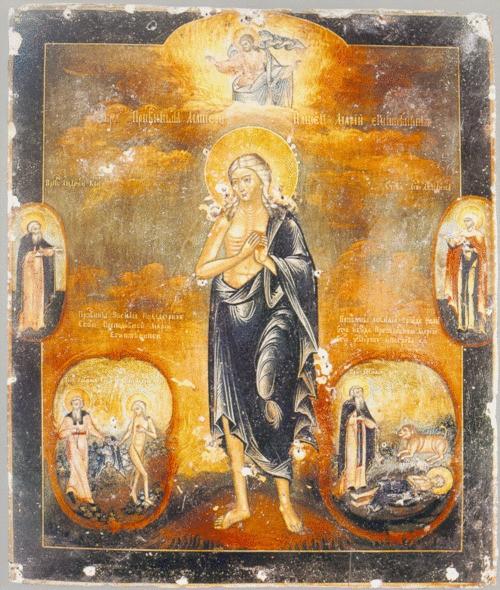
Today we also honor St. Mary of Egypt, whose life reveals the same truth. After years of sin, her encounter with the Theotokos led her to radical repentance. She allowed God’s mercy to reshape her life entirely, choosing a path of humility and holiness in the desert. Like Mary of Egypt, we are invited to let God’s grace transform us, moving from self‑seeking to Christ‑centered service.
Living the Gospel as Missionary Disciples
- Serve someone without being asked. Look for a simple act of kindness—help a coworker, visit someone lonely, or offer support quietly and without expectation.
- Seek reconciliation. St. Mary of Egypt’s life shows that no sin is stronger than God’s mercy. Reach out to someone you’ve avoided or make plans to receive the Mystery of Repentance before Pascha.
- Practice hidden generosity. Give alms or support a parish family in need—privately, without recognition. Let Christ alone see your gift.
Pray for a “servant’s heart.” Each morning this week, pray: “Lord Jesus, make me a servant today. Let me walk with You on the road to Jerusalem.”
Bishop Robert Pipta presides over the Ruthenian Byzantine Catholic Eparchy of Parma, Ohio.
St. Mary of Egypt
Born probably about 344; died about 421. At the early age of twelve Mary left her home and came to Alexandria, where for upwards of seventeen years she led a life of public prostitution. At the end of that time, on the occasion of a pilgrimage to Jerusalem for the Feast of the Exaltation of the Holy Cross, she embarked for Palestine, not however with the intention of making the pilgrimage, but in the hope that life on board ship would afford her new and abundant opportunities of gratifying an insatiable lust. Arrived in Jerusalem she persisted in her shameless life, and on the Feast of the Exaltation of the Cross joined the crowds towards the church where the sacred relic was venerated, hoping to meet in the gathering some new victims whom she might allure into sin. And now came the turning-point in her career. When she reached the church door, she suddenly felt herself repelled by some secret force, and having vainly attempted three or four times to enter, she retired to a corner of the churchyard, and was struck with remorse for her wicked life, which she recognized as the cause of her exclusion from the church. Bursting into bitter tears and beating her breast, she began to bewail her sins. Just then her eyes fell upon a statue of the Blessed Virgin above the spot where she was standing, and in deep faith and humility of heart she besought Our Lady for help, and permission to enter the church and venerate the sacred wood on which Jesus had suffered, promising that if her request were granted, she would then renounce forever the world and its ways, and forthwith depart whithersoever Our Lady might lead her. Encouraged by prayer and counting on the mercy of the Mother of God, she once more approached the door of the church, and this time succeeded in entering without the slightest difficulty. Having adored the Holy Cross and kissed the pavement of the church, she returned to Our Lady's statue, and while praying there for guidance as to her future course, she seemed to hear a voice from afar telling her that if she crossed the Jordan, she would find rest. That same evening Mary reached the Jordan and received Holy Communion in a church dedicated to the Baptist, and the day following crossed the river and wandered eastward into the desert that stretches towards Arabia.