Priest Who Defended The Sacrament Of Confession Beatified In Guatemala
A humble friar chose faithful silence, and death, over the betrayal of his ministry.
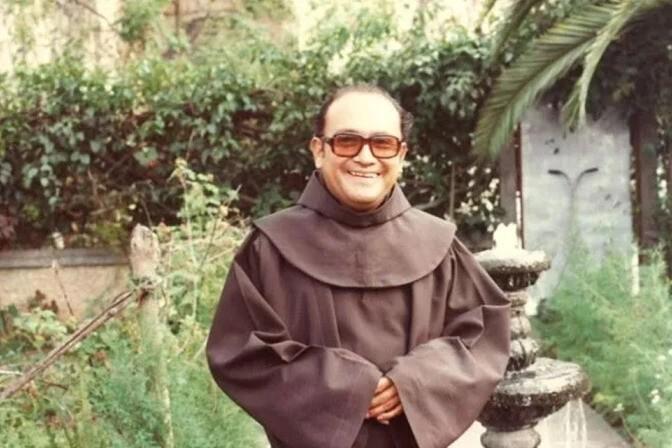
The Franciscan friar. Fr. Augusto Rafael Ramírez Monasterio, who was murdered for refusing to reveal the secret of confession in his native Guatemala, was beatified on November 7, in Guatemala.
The solemn Eucharist took place on the grounds of Finca Municipal Florencia, in the department of Sacatepéquez, before thousands of the faithful and in the presence of Guatemala's President, Bernardo Arevalo. Cardinal Francisco Robles Ortega, Archbishop of Guadalajara (Mexico), presided over the Mass of beatification and attended as a pontifical delegate—sent specifically by Pope Leo XIV to represent the Holy See at this celebration.
In 1983, Friar Augusto was kidnapped after receiving a man in confession and providing him with spiritual guidance. During his captivity, security forces subjected him to severe torture to compel him to reveal what he had heard within the sacrament. Nevertheless, he remained steadfast in his priestly duty and did not violate the sacramental seal. Ultimately, he was murdered on November 7 of that year before witnesses and in broad daylight in Guatemala City. At the time, Guatemala was in the midst of a civil war that pitted revolutionaries, human rights advocates, and the military against each other. Thousands of Guatemalans died in the thirty years of the conflict.
The secret of confession is an absolute
During his homily, Cardinal Robles Ortega expressed his joy that Friar Augusto had been “officially added to this altar of faithful witnesses,” noting that he chose “faithful silence over the betrayal of his ministry.”
Reflecting on the significance of his martyrdom, the Cardinal specifically invited pastors to examine how they value and protect the sacramental seal. He recalled that the confessional must be recognized as a “tabernacle of mercy,” since the confidentiality of what is heard during confession is not “a mere ecclesiastical privilege or a legal construct that can be negotiated under the threat of political oppression; it is an absolute requirement that stems directly from the sanctity of the sacrament.”
In an official photo of Friar Augusto Ramírez Monasterio, the unstitched hems of his sleeves to cover the wounds on his hands can be seen. Torturers had hung him by his wrists from the rafters of a torture cell on June 2, 1983. When he persisted in refusing to reveal what a penitent had told him, the military abducted him months later and killed him.
For this reason, he warned that violating this obligation—or attempting to do so through pressure—amounts to “an assault on the most sacred freedom of the human being and on the very mercy of the Father.”
“For him, defending the sacramental seal meant defending the dignity of every person, ensuring that the sinner would always find a safe refuge in which to rebuild their life, without fear of losing their salvation,” the Mexican cardinal asserted.
Two urgent commitments for priests
Drawing on the example of the new *beatus* (blessed), the Archbishop of Guadalajara proposed two commitments for priests today: “absolute confidentiality” and “closeness to suffering.” Regarding the first point, he emphasized that priests are called to be “zealous guardians of the consciences of our faithful”—especially, he noted, “in a world where everything is exposed, where privacy is easily violated, and where external pressures seek to relativize eternal values.”
“We priests must renew the firm conviction that the seal [of confession] is unconditional,” he stated.
As for closeness to suffering, he recalled that Friar Augusto returned to Guatemala after exercising his ministry in Spain, dedicating himself to pastoral work and defending the poorest. His life’s path, he pointed out, serves as a reminder that ministry “cannot be indifferent to the pain of our people.”
Consequently, he urged priests to be shepherds “capable of standing alongside the persecuted, the marginalized, and those who seek the consolation of faith—rejecting the temptation of a comfortable exile or a cowardly silence in the face of injustice.”
His martyrdom should not be viewed merely as a painful memory of a bygone era. It must also pose a question to us: What place does faithfulness to Christ hold in our own lives? What are we prepared to safeguard when our convictions are put to the test? Do we truly trust that no threat can take away what we have entrusted to God?
Finally, Cardinal Robles Ortega reminded us that the Gospel is not proclaimed solely through words. There are moments when it must be proclaimed “through our decisions, our faithfulness, our service, and our very lives.”